Cooking becomes much easier when you understand a few basic kitchen skills. You do not need professional training or expensive equipment to prepare good food at home. Most successful home cooking depends on simple habits such as preparing ingredients correctly, controlling heat, using a knife safely, tasting food, and keeping the kitchen organized.
When I started learning more about cooking, I realized that recipes alone are not enough. A recipe may tell you what ingredients to use, but basic kitchen skills help you understand what to do with those ingredients. Once these skills become part of your routine, you can cook with more confidence and make everyday meals without feeling stressed.
Learning basic kitchen skills also helps save time and reduce food waste. You become better at using ingredients already available at home instead of depending on packaged meals or ordering food. The following skills can make everyday cooking simpler, safer, and more enjoyable.
Learn How to Read a Recipe Before Cooking
One of the simplest kitchen skills is reading the complete recipe before you begin. Many cooking problems happen because people start preparing food after reading only the first few instructions.
Read the ingredients list first. Make sure everything you need is available. Then read the cooking steps so you understand the order in which ingredients will be used.
It is also helpful to notice preparation instructions such as chopped onions, softened butter, cooked rice, or preheated oven. These small details can affect the final result.
Preparing yourself before cooking prevents unnecessary rushing. It also allows you to enjoy the process instead of constantly searching for ingredients.
Prepare Ingredients Before Turning on the Heat
Good preparation is one of the most useful basic kitchen skills. Before heating a pan, wash, peel, chop, and measure the ingredients you will need.
Professional cooks often prepare ingredients before cooking because many recipes move quickly once heat is involved. You may not have enough time to chop vegetables after garlic or onions have already started cooking.
Place prepared ingredients in bowls or on a clean plate. Keep frequently used items such as oil, salt, herbs, and spices nearby.
A few minutes of preparation can make the entire cooking process feel calm and organized.
Practice Safe Knife Skills
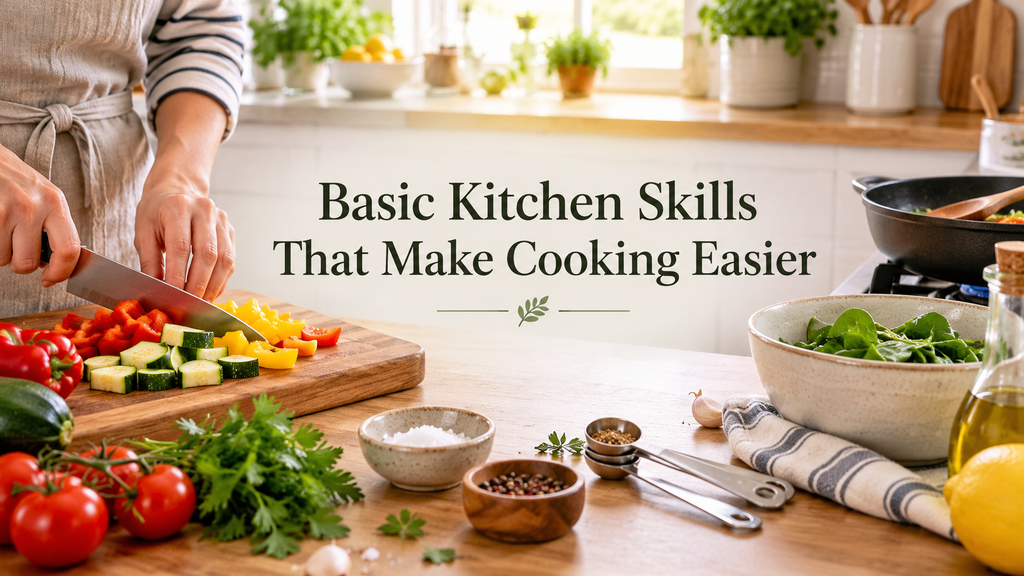
A good kitchen knife can make food preparation much faster. You do not need to perform complicated cutting techniques. Learning a few basic knife skills is usually enough for everyday cooking.
Always use a stable cutting board. If your board moves while cutting, place a slightly damp kitchen towel underneath it.
Hold the knife firmly but comfortably. Keep the fingers of your other hand slightly curved when holding vegetables. This helps keep your fingertips away from the blade.
Practice cutting onions, potatoes, carrots, tomatoes, and other common ingredients into similar sizes. Evenly sized pieces usually cook more evenly.
A sharp knife is often safer than a dull one because it requires less force. Keep your knives clean, dry, and properly maintained.
Understand Basic Heat Control
Heat control can completely change the quality of food. One of the most important cooking skills is understanding when to use low, medium, or high heat.
High heat is useful when you want quick browning or boiling. Medium heat works well for many everyday cooking tasks, including frying vegetables and cooking eggs. Low heat is useful for gentle cooking, melting ingredients, or allowing flavors to develop slowly.
Cooking everything on high heat does not make food cook better. It may burn the outside while leaving the inside undercooked.
Watch your food instead of depending only on cooking times. Every stove and pan behaves slightly differently.
Learning how food reacts to different temperatures will make you much more confident in the kitchen.
Learn How to Season Food Properly
Salt, herbs, and spices can turn simple ingredients into flavorful meals. However, good seasoning is not about adding large amounts of spices.
Start with a small amount and taste the food whenever possible. You can always add more seasoning, but removing too much salt or spice can be difficult.
Seasoning during different stages of cooking often gives better results than adding everything at the end.
For example, lightly seasoning vegetables while they cook allows flavor to develop gradually. Soups and sauces may need to be tasted several times before serving.
Over time, your taste becomes one of your most useful cooking tools.
Taste Food While Cooking
Tasting is one of the easiest ways to improve home cooking. Whenever it is safe to do so, taste your food before serving it.
Ask yourself simple questions. Does it need more salt? Is it too spicy? Does it need more acidity? Is the texture right?
Small adjustments can make a noticeable difference.
A little lemon juice may brighten a heavy dish. A small amount of salt may improve bland vegetables. Additional cooking time may help a sauce become richer.
Tasting regularly helps you understand how ingredients change while cooking.
Learn Basic Measuring Skills
Some recipes are flexible, while others require accurate measurements. Baking usually depends more heavily on exact measurements because the balance between ingredients affects texture and structure.
Learn how to use measuring cups and spoons correctly.
When measuring dry ingredients such as flour, avoid pressing them tightly into the cup unless the recipe specifically says to do so. Level the top gently for a more consistent measurement.
For liquids, place the measuring container on a flat surface and check the measurement at eye level.
Accurate measuring is especially helpful when you are learning a new recipe for the first time.
Understand Common Cooking Methods
Knowing a few cooking methods gives you the ability to prepare many different meals.
Boiling is useful for foods such as pasta, rice, potatoes, and vegetables. Simmering is gentler and works well for soups, sauces, and stews.
Sautéing involves cooking food quickly in a small amount of oil over moderate or higher heat. It is commonly used for onions, vegetables, and small pieces of meat.
Roasting uses dry oven heat and works beautifully for vegetables, chicken, potatoes, and many other ingredients.
Steaming allows food to cook using hot steam and is useful for vegetables, fish, dumplings, and similar foods.
Once you understand these basic cooking methods, many recipes become easier to follow.
Keep the Kitchen Organized
Kitchen organization may not sound like a cooking skill, but it can make a huge difference.
Keep commonly used items in places where they are easy to reach. Store similar ingredients together. Spices can stay in one area, baking ingredients in another, and cooking utensils near the stove.
Try to return items to the same place after using them. You will spend less time searching for equipment during cooking.
A well organized kitchen also helps you see what food you already have, which can reduce unnecessary purchases.
Clean While You Cook
A large pile of dishes can make cooking feel like hard work. Cleaning small things during the cooking process can prevent this problem.
If food is simmering for ten minutes, use a few minutes to wash the cutting board, knife, and empty bowls.
Keep a container or bowl nearby for vegetable peels and food scraps. This keeps your work surface cleaner.
Wipe spills quickly before they dry or become sticky.
By the time your meal is ready, most of the kitchen may already be clean.
Learn How to Use Leftovers
Using leftovers wisely is another practical kitchen skill.
Cooked vegetables can become part of an omelet, soup, rice dish, or pasta meal. Leftover chicken can be added to sandwiches, salads, or wraps. Cooked rice can be turned into a quick meal with vegetables and eggs.
Before throwing food away, think about whether it can become part of another dish.
Store leftovers properly in clean containers and refrigerate them promptly. Good food storage makes future meal preparation easier and helps reduce waste.
Understand Ingredient Substitutions
Sometimes you may begin cooking and discover that one ingredient is missing. Understanding simple substitutions can save the meal.
You do not need to follow every recipe with complete rigidity. Many ingredients can be replaced depending on the dish.
Different vegetables can often be exchanged according to what is available. Herbs can sometimes be substituted with similar alternatives. A recipe that uses one type of bean may also work with another.
However, substitutions require more caution when baking because ingredients often have specific chemical functions.
Learning substitutions comes naturally as you gain cooking experience.
Keep Basic Ingredients at Home
Having a few everyday ingredients available makes cooking much easier.
Rice, pasta, flour, oats, beans, lentils, eggs, onions, garlic, potatoes, tomatoes, cooking oil, herbs, and common spices can be used in many meals.
Fresh vegetables, fruits, yogurt, milk, and other refrigerated items can be purchased according to your household needs.
A well stocked kitchen does not mean buying everything. It simply means keeping ingredients that you regularly use.
When basic ingredients are already available, preparing a simple meal becomes much faster.
Learn How to Cook Simple Foods Well
You do not need to start with difficult recipes.
Learn how to cook a few simple foods confidently. Practice making rice, eggs, pasta, vegetables, soup, chicken, lentils, or other foods that you enjoy regularly.
Cooking the same basic dishes several times helps you notice small details. You begin to understand how much water is needed, how long ingredients take to cook, and when seasoning should be added.
Once you feel comfortable with simple dishes, more complicated recipes become much less intimidating.
Pay Attention to Texture
Good cooking is not only about flavor. Texture is equally important.
Vegetables should not automatically be cooked until extremely soft. Pasta should have a pleasant bite. Fried foods should have an appropriate crispness. Rice should have the texture intended for the particular dish.
Touch, look at, and taste food as it cooks.
Learning to recognize texture helps you know when food is ready rather than depending completely on a timer.
Avoid Overcrowding the Pan
Putting too much food into a pan at once is a common cooking mistake.
When ingredients are crowded together, moisture becomes trapped. Instead of browning properly, food may begin steaming.
If you are cooking a large quantity, prepare it in batches when necessary.
Giving ingredients enough space allows heat to circulate properly and often produces better color, texture, and flavor.
Let Food Rest When Necessary
Some foods benefit from resting before they are cut or served.
For example, freshly cooked meat may release too much juice if it is sliced immediately. Allowing it to rest briefly can help the juices settle.
Baked foods may also need time to cool before cutting.
Patience is sometimes a cooking skill. A few extra minutes can improve the final texture and presentation.
Follow Basic Kitchen Safety
Safe cooking habits should always be part of kitchen skills.
Wash your hands before handling food and after touching raw meat. Keep cutting boards and utensils clean.
Avoid allowing raw meat or its juices to touch ready to eat foods.
Be careful with hot pans, boiling liquids, and cooking oil. Turn pan handles away from the edge of the stove so they are less likely to be knocked accidentally.
Food safety protects both you and the people eating your meals.
Build Confidence Through Regular Practice
Nobody becomes comfortable in the kitchen after cooking only once or twice.
Mistakes are part of learning. You may overcook vegetables, add too much seasoning, or prepare rice with the wrong amount of water. These experiences teach you what to change next time.
Try to cook regularly, even if you prepare simple meals.
With practice, many tasks become automatic. Chopping vegetables becomes faster. You learn how your stove behaves. You start recognizing flavors without constantly checking recipes.
This confidence is what eventually makes cooking feel easy.
Final Thoughts
Basic kitchen skills can completely change the way you feel about cooking. Skills such as preparing ingredients in advance, using a knife safely, controlling heat, measuring correctly, tasting food, understanding cooking methods, and keeping the kitchen organized make everyday meals easier to prepare.
You do not need to learn everything at once. Start with a few simple techniques and practice them regularly. As your experience grows, you will naturally become more comfortable experimenting with ingredients and adjusting recipes.
The most important lesson is that good cooking is not based only on complicated recipes. It comes from understanding simple techniques and using them consistently.
When you develop strong basic kitchen skills, cooking becomes less stressful and more enjoyable. You spend less time worrying about mistakes and more time creating meals that suit your taste, schedule, and everyday life.