Cooking dinner at home can be one of the most satisfying parts of the day. A freshly prepared meal brings comfort, allows us to choose better ingredients, and gives the family an opportunity to sit together. However, dinner preparation can also feel difficult after a busy day. When work, study, household responsibilities, and personal tasks take up most of the day, spending a long time in the kitchen may seem exhausting.
Fortunately, home cooking does not always have to take hours. With thoughtful planning, simple kitchen habits, and better organization, it is possible to prepare delicious meals in much less time. Learning a few easy ways to save time while cooking dinner can make everyday cooking more enjoyable and less stressful.
The main idea is not to cook faster by rushing. Instead, it is about working in a more organized way. Small improvements in meal planning, ingredient preparation, cooking methods, and kitchen organization can save several minutes every evening. Over a week, these small savings can make a noticeable difference.
Plan Dinner Before the Evening Begins
One of the easiest ways to save time while cooking dinner is to decide what you are going to make before you enter the kitchen. A large amount of cooking time is often wasted simply thinking about what to prepare.
When you already know the dinner menu, you can start cooking immediately.
Try planning meals for several days at a time. You do not need a complicated meal schedule. Simply write down a few dinner ideas based on the ingredients available at home.
For example, one evening may include rice with vegetables, another may include grilled chicken with salad, and another may include pasta with a homemade sauce.
A simple meal plan also makes grocery shopping easier because you know exactly what ingredients you need.
Keep Frequently Used Ingredients Ready
A well stocked kitchen can save a surprising amount of time. Basic ingredients that are used frequently should always be available.
Rice, pasta, lentils, beans, canned tomatoes, herbs, spices, onions, garlic, cooking oil, eggs, and frozen vegetables can be useful for preparing quick dinners.
When basic ingredients are already in the kitchen, you can create several different meals without making an extra trip to the grocery store.
It is also helpful to check your kitchen supplies once or twice each week. This prevents discovering halfway through cooking that an important ingredient is missing.
Prepare Ingredients Before You Start Cooking
Professional cooks often prepare their ingredients before the actual cooking begins. This simple habit can also make home cooking much easier.
Before turning on the stove, gather everything you need.
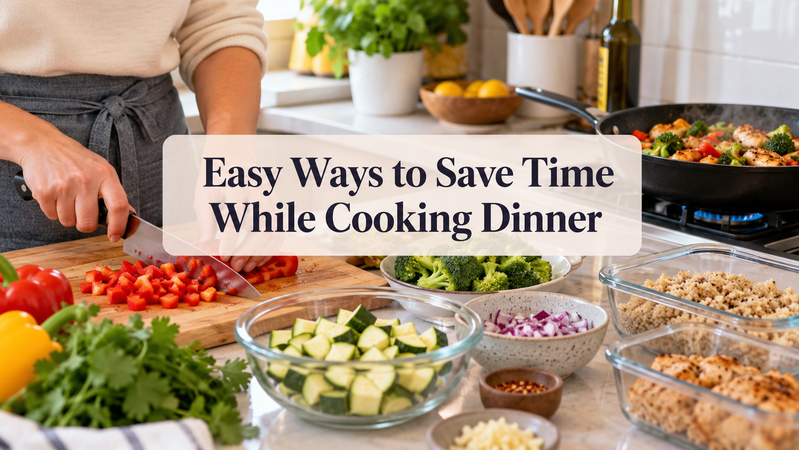
Wash the vegetables, chop the onions, prepare the spices, and place the necessary utensils nearby.
Having ingredients ready helps you move smoothly from one cooking step to another.
For example, if you begin frying onions and then start searching for garlic, tomatoes, and spices, the cooking process becomes slower and more stressful. Preparing everything first creates a natural flow.
Chop Vegetables in Larger Batches
Vegetable preparation often takes more time than the actual cooking. Washing, peeling, and chopping vegetables every evening can make dinner preparation feel longer than necessary.
One useful solution is to prepare some vegetables in larger batches.
You can wash and chop suitable vegetables when you have extra time and store them properly in the refrigerator. Carrots, cabbage, bell peppers, and certain other vegetables can often be prepared ahead for future meals.
Onions can also be chopped in advance for short term use if stored carefully in a sealed container.
Having prepared vegetables available means that a stir fry, soup, omelet, rice dish, or pasta meal can come together much faster.
Keep the Kitchen Organized
Kitchen organization has a direct effect on cooking time.
If you regularly spend several minutes looking for a knife, spice, saucepan, or cutting board, your dinner preparation becomes unnecessarily slow.
Store frequently used items in easy to reach places.
Keep everyday spices together. Place cooking utensils near the stove. Store knives and cutting boards in a convenient area.
Ingredients that are used regularly should also have consistent storage locations.
When everything has its own place, cooking becomes more automatic. You know exactly where to reach for each item.
Choose Simple Dinner Recipes
Dinner does not need to contain many complicated dishes to be satisfying.
Some of the best home cooked meals are made with simple ingredients and straightforward cooking methods.
One pot meals, vegetable stir fries, soups, pasta dishes, rice bowls, sandwiches, wraps, omelets, baked vegetables, and simple chicken dishes can all make excellent dinners.
Try choosing recipes that require fewer preparation steps on busy days.
Save complicated recipes for weekends or days when you have more time.
The purpose of weekday cooking is often to prepare something fresh, enjoyable, and nourishing without spending the entire evening in the kitchen.
Use One Pot Cooking When Possible
One pot cooking is one of the most practical ways to save time while cooking dinner.
Instead of preparing several dishes in separate pans, you can combine ingredients into one main dish.
Rice dishes, soups, stews, pasta meals, lentil dishes, and vegetable combinations often work well with this method.
Using fewer pots also reduces washing time after dinner.
This is particularly helpful because saving time in the kitchen should include both cooking and cleaning.
A delicious meal that requires only one saucepan can make a busy evening much easier.
Start With Foods That Take the Longest
Good timing can significantly reduce overall cooking time.
When preparing several foods, begin with the ingredient that requires the longest cooking period.
If rice takes twenty minutes while vegetables take ten minutes, start the rice first.
While the rice cooks, prepare the vegetables.
Similarly, if something is baking in the oven, use that baking time to prepare a salad or sauce.
This technique allows several tasks to happen at the same time without making cooking feel rushed.
Clean While Food Is Cooking
Waiting time does not have to become wasted time.
If something needs to simmer for ten minutes, you can use those minutes to wash the cutting board, clean the knife, wipe the kitchen counter, or put unused ingredients away.
By cleaning gradually, you avoid facing a large pile of dirty dishes after dinner.
This habit also keeps the cooking area organized, which makes the remaining preparation easier.
However, always keep an eye on food that needs regular stirring or attention.
Use Frozen Vegetables When Helpful
Fresh vegetables are excellent, but frozen vegetables can be extremely useful on busy evenings.
They are usually already washed and chopped, which eliminates much of the preparation work.
Frozen peas, corn, spinach, carrots, and mixed vegetables can quickly be added to rice, pasta, soups, or stir fries.
Keeping a few vegetables in the freezer also helps when fresh groceries are running low.
Using frozen ingredients occasionally does not mean that dinner is less homemade. They can simply be practical tools for making everyday cooking faster.
Cook Extra Portions
Cooking a slightly larger amount usually requires much less extra effort than preparing a completely new meal the following day.
If you are already making rice, soup, lentils, chicken, or another suitable dish, consider preparing an additional portion.
Leftovers can sometimes become the base of another meal.
Cooked chicken may be used in wraps or sandwiches. Leftover rice can be turned into vegetable rice. Cooked vegetables can be added to an omelet or pasta dish.
This approach reduces both cooking time and food waste.
Use Leftovers Creatively
Leftovers do not have to mean eating exactly the same dinner again.
They can become useful ingredients for a new meal.
For example, roasted vegetables from one dinner can become part of a rice bowl the next day. Cooked meat can be added to pasta, sandwiches, wraps, or salads.
Learning to reuse prepared ingredients is one of the best ways to save time while cooking dinner.
It also encourages creativity because you begin looking at leftovers as useful building blocks rather than unwanted food.
Keep Quick Sauces and Seasonings Available
Simple seasonings can transform basic ingredients into flavorful meals.
Keep your favorite herbs and spices organized and easy to reach.
You can also prepare simple homemade sauces or dressings in advance and store them correctly.
A basic yogurt dressing, tomato sauce, herb mixture, or simple marinade can save preparation time later.
With a flavorful sauce ready, plain rice, vegetables, pasta, or cooked protein can quickly become a complete meal.
Read the Entire Recipe Before Starting
When trying a new recipe, read all the instructions before cooking.
This may seem like an extra step, but it actually saves time.
Reading the recipe first helps you understand which ingredients need preparation and which cooking stages require attention.
It also prevents unexpected instructions from appearing halfway through the cooking process.
For example, you may discover that an ingredient needs to be chopped, soaked, or prepared before another step begins.
Knowing this beforehand makes the whole process smoother.
Use the Right Kitchen Tools
Good kitchen tools do not need to be expensive, but they should be practical.
A sharp knife can make vegetable preparation much faster than a dull one.
A suitable cutting board provides enough space to work comfortably.
A vegetable peeler can speed up preparation, while a grater can help prepare certain ingredients quickly.
Using the correct pan size is also important. An overcrowded pan may cause food to cook unevenly and take longer.
Simple, functional tools can make everyday cooking noticeably more efficient.
Keep a List of Fast Dinner Ideas
Sometimes the biggest challenge is not cooking but deciding what to cook.
Create a personal list of quick dinner ideas that your household enjoys.
Your list might include vegetable pasta, chicken rice, lentil soup, egg sandwiches, vegetable omelets, homemade wraps, baked potatoes, rice bowls, or simple salads with protein.
When you are tired or busy, look at the list instead of trying to invent a meal from nothing.
Over time, these familiar meals become even faster because you already understand the preparation process.
Do Not Make Every Dinner Complicated
There is no rule that says every dinner must look like a special occasion meal.
Simple food can still be healthy, comforting, and delicious.
A meal containing rice, vegetables, and a simple protein can be completely satisfying.
Soup with bread can also make a pleasant dinner.
By removing the pressure to prepare several dishes every evening, cooking becomes much easier.
Focus on balance, freshness, taste, and reasonable portions instead of unnecessary complexity.
Organize the Refrigerator Regularly
An organized refrigerator helps you quickly see what ingredients are available.
When food is hidden behind containers or forgotten in drawers, you may waste time searching for ingredients or accidentally buy things you already have.
Try keeping similar items together.
Place vegetables in their usual section. Keep prepared ingredients in clearly visible containers. Store leftovers where they can easily be noticed.
A quick refrigerator check before meal planning can also help you use foods before they spoil.
Create a Comfortable Cooking Routine
Cooking becomes faster when you develop familiar routines.
You might begin by clearing the counter, washing your hands, gathering ingredients, preparing vegetables, and then turning on the stove.
Following a similar order each evening reduces unnecessary decisions.
With practice, many cooking tasks become natural.
You begin to know how much rice is needed, how long vegetables usually cook, and which spices work well with certain foods.
Experience itself becomes a time saving tool.
Conclusion
Finding easy ways to save time while cooking dinner is mainly about preparation, organization, and simple decision making. You do not need expensive appliances or complicated cooking techniques to become more efficient in the kitchen.
Planning meals ahead, keeping basic ingredients available, preparing vegetables early, choosing simple recipes, using one pot meals, cooking extra portions, and cleaning while food cooks can all make a meaningful difference.
The goal is not to rush through dinner preparation. It is to remove unnecessary work so that cooking feels easier.
When your kitchen is organized and your meals are planned, you can spend less time worrying about dinner and more time enjoying the food you prepare.
With a little practice, these habits can become part of your normal routine. Dinner can then remain fresh, homemade, and enjoyable without taking up the entire evening.