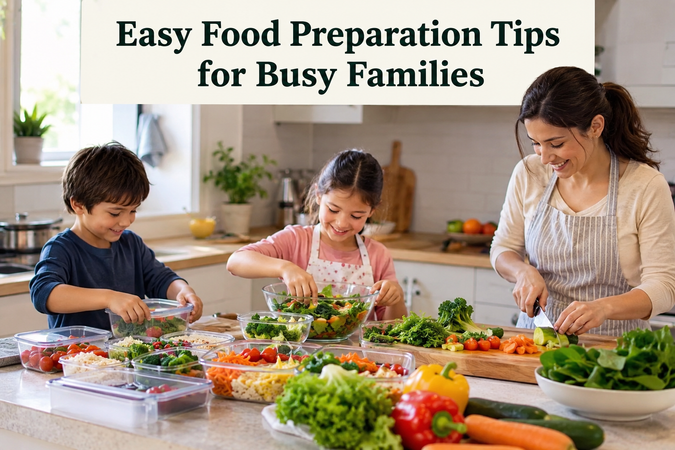
Preparing fresh food every day can feel difficult when the whole family has a busy schedule. Parents may have work responsibilities, children have school and homework, and there are always household tasks waiting to be completed. When everyone is tired at the end of the day, cooking can easily become another stressful responsibility.
However, home cooking does not need to take hours. With simple planning, smart food preparation, and a few useful kitchen habits, busy families can prepare fresh and enjoyable meals without spending all day in the kitchen.
Learning easy food preparation tips for busy families can help save time, reduce unnecessary effort, control food expenses, and make everyday meals much more manageable. The goal is not to prepare complicated dishes. It is to create a practical routine that fits naturally into family life.
Plan Meals Before the Week Begins
Meal planning is one of the easiest ways to reduce stress in the kitchen.
When there is no plan, families often spend several minutes every day deciding what to cook. Sometimes ingredients are missing, which means another trip to the store. On other days, food that was purchased earlier may go unused.
A simple weekly meal plan can prevent many of these problems.
Before buying groceries, think about the meals your family normally enjoys. Write down a few breakfast, lunch, and dinner ideas for the coming days.
The plan does not have to be complicated. Simple meals such as rice with vegetables, pasta, chicken with salad, homemade soup, sandwiches, lentils, eggs, or baked vegetables can all become part of an easy weekly menu.
Knowing what you are going to cook also makes grocery shopping faster because you can buy only the ingredients you actually need.
Prepare a Weekly Grocery List
A grocery list is another useful tool for busy families.
Once the weekly meals are planned, check your refrigerator, freezer, and kitchen cabinets before shopping. This helps you avoid buying ingredients you already have.
Organize the grocery list by food type. You can create simple sections for vegetables, fruits, dairy products, grains, meat, pantry ingredients, and household supplies.
Shopping with a list saves time because you can move through the store with a clear purpose.
It can also reduce unnecessary spending. When you know exactly what you need, you are less likely to buy random items that may eventually be wasted.
Wash Vegetables After Shopping
Fresh vegetables often require washing, cleaning, trimming, and cutting before cooking. Doing some of this work in advance can make weekday meal preparation much easier.
After grocery shopping, wash vegetables that can safely be stored after cleaning.
Allow them to dry properly before placing them in suitable containers.
Vegetables such as carrots, cucumbers, bell peppers, and leafy greens can often be prepared ahead depending on how they will be used.
When clean vegetables are already available in the refrigerator, preparing salads, soups, sandwiches, and cooked meals becomes much faster.
Proper storage is important because excess moisture may cause some vegetables to spoil more quickly.
Cut Ingredients in Advance
Chopping vegetables can take a surprising amount of time when preparing dinner.
Busy families can save time by cutting selected ingredients earlier.
Onions, carrots, bell peppers, cabbage, celery, and several other vegetables can be chopped in advance and stored properly in the refrigerator.
You can also prepare ingredients according to the meals planned for the week.
For example, if you are planning vegetable rice, soup, and pasta during the week, prepare some of the vegetables at the same time.
Store each ingredient separately in clean containers.
When dinner time arrives, much of the preparation work will already be finished.
Cook Larger Portions
Cooking a slightly larger quantity of food can reduce the amount of cooking needed during the week.
If you are preparing rice, beans, lentils, soup, chicken, or another family favorite, consider making enough for more than one meal.
The extra portion can be stored for another day.
Leftover cooked chicken may be used in sandwiches, wraps, pasta, rice dishes, or salads.
Cooked vegetables can be added to soups, omelets, or grain bowls.
Rice can be combined with vegetables, eggs, or another protein source to create a completely different meal.
Using prepared food creatively prevents waste and makes future meals quicker.
Keep Simple Ingredients at Home
A well organized kitchen makes quick cooking much easier.
Busy families should keep several basic ingredients available for days when there is little time to prepare food.
Useful pantry foods may include rice, pasta, oats, lentils, beans, canned tomatoes, flour, spices, nuts, and cooking oil.
Refrigerator essentials may include eggs, milk, yogurt, cheese, fresh vegetables, fruits, and suitable protein sources.
Having basic ingredients available means you can prepare a simple meal without making an emergency grocery trip.
A vegetable omelet, pasta dish, rice bowl, soup, or sandwich can often be prepared quickly using everyday ingredients.
Use Simple Cooking Methods
Complicated cooking techniques are not necessary for good family meals.
Simple cooking methods often save both time and effort.
Baking, steaming, boiling, roasting, grilling, and simple pan cooking can produce delicious meals with limited preparation.
For example, vegetables and chicken can be placed on a baking tray and cooked together.
Soup can be prepared in one large pot.
Rice and vegetables can also be combined into simple one pot meals.
Choosing easy cooking methods means fewer dishes to wash and less time spent standing in the kitchen.

Prepare Breakfast the Night Before
Mornings can be particularly busy for families.
Preparing part of breakfast the night before can make the start of the day much calmer.
Overnight oats are one simple option. Oats can be combined with milk or yogurt and stored in the refrigerator overnight. Fresh fruit can be added in the morning.
Fruit can also be washed and prepared ahead.
Ingredients for smoothies can be portioned in advance so they are ready to blend.
Boiled eggs can be prepared earlier and stored properly.
Even placing breakfast dishes and ingredients in an organized area can save valuable minutes in the morning.
Make Lunch Preparation Easier
Packing school and work lunches every morning can become tiring.
Preparing lunch ingredients ahead can reduce this pressure.
For sandwiches, keep washed vegetables, cooked chicken, cheese, or other fillings ready in the refrigerator.
Fresh fruits can be washed ahead and placed where they are easy to reach.
Small containers can also be used to portion nuts, yogurt, chopped vegetables, or other simple foods.
When ingredients are organized, packing lunches becomes a short task rather than a full cooking session.
Organize the Refrigerator
An organized refrigerator saves more time than many people realize.
When food is difficult to find, ingredients may be forgotten until they are no longer fresh.
Keep similar foods together.
Vegetables can have one section, fruits another, dairy products another, and prepared foods another.
Transparent containers are useful because you can quickly see what is inside.
Place food that should be eaten soon near the front of the refrigerator.
This encourages family members to use older ingredients before opening newer ones.
A simple refrigerator organization system can reduce both food waste and preparation time.
Keep the Kitchen Counter Clear
Cooking becomes slower when the kitchen counter is crowded.
Try to keep the main food preparation area clean and clear.
Store appliances that are not used regularly in suitable cabinets or shelves.
Keep frequently used tools where they are easy to reach.
A clear counter provides enough space for chopping vegetables, preparing ingredients, and serving food comfortably.
Cleaning the preparation area after each cooking session also makes it easier to begin the next meal.
Use Helpful Kitchen Tools
The right kitchen tools can save a great deal of preparation time.
A sharp kitchen knife makes chopping faster and safer when used properly.
A large cutting board provides enough space for food preparation.
Storage containers help organize prepared ingredients.
Other useful tools may include a vegetable peeler, blender, food processor, rice cooker, or slow cooker depending on the family’s cooking habits.
There is no need to purchase every kitchen gadget available.
Choose tools that solve a real problem and that your family will use regularly.
Clean While Cooking
One of the biggest frustrations after preparing dinner is seeing a kitchen full of dirty dishes.
Cleaning while cooking can make the process much easier.
If food is simmering or baking, use those few minutes to wash cutting boards, knives, bowls, and other tools that are no longer needed.
Put ingredients back in their proper places immediately after using them.
Wipe the counter when spills happen instead of leaving everything until the end.
By the time dinner is ready, much of the kitchen may already be clean.
Choose Meals With Similar Ingredients
Meal planning becomes easier when several dishes use similar ingredients.
For example, if you buy carrots, onions, tomatoes, bell peppers, and chicken, these ingredients can be used in many different meals.
One evening you might prepare chicken with vegetables.
The next day, some of the same ingredients may be used for pasta.
Later in the week they could become part of a soup, sandwich filling, or rice dish.
Using ingredients in different ways helps reduce food waste and makes grocery shopping more practical.
Keep Quick Meal Ideas Ready
Every family has days when the original meal plan does not work.
Instead of becoming stressed, keep a few quick meal ideas available.
Eggs with vegetables can make a fast meal.
Pasta with tomato sauce and vegetables can be prepared without much effort.
Rice combined with beans, vegetables, or cooked chicken can become a filling dinner.
Homemade sandwiches, soups, wraps, and simple salads are also useful options.
Having several easy meals in mind reduces the temptation to depend on expensive last minute food choices.
Involve the Whole Family
Food preparation does not always need to be handled by one person.
Family members can help with age appropriate kitchen tasks.
Children may be able to wash fruits, arrange ingredients, set the table, or place safe items into containers.
Older children may help prepare simple sandwiches, salads, or breakfast foods under suitable supervision.
Another adult can help with chopping, cooking, washing dishes, or putting groceries away.
Sharing kitchen responsibilities makes meal preparation easier and also teaches children useful everyday skills.
Keep Food Preparation Realistic
It is easy to see perfectly organized kitchens and complicated meal preparation routines and feel that you should do the same.
However, every family has different needs.
A successful food preparation routine should make life easier, not create additional work.
You do not need to prepare every meal for the entire week in a single day.
Even washing vegetables, cooking some rice, preparing breakfast ingredients, or chopping onions in advance can save time.
Start with one or two simple habits.
Once they become part of your normal routine, you can gradually add more.
Use Leftovers Carefully
Leftovers can save both time and money when stored and handled properly.
Instead of seeing leftovers as the same meal again, think of them as ingredients for something new.
Roasted vegetables can be added to eggs.
Cooked chicken can become a sandwich filling.
Rice can be used in another dish.
Small amounts of vegetables may be added to soup.
Store leftovers promptly in clean containers and follow appropriate food safety practices.
Labeling prepared food with the date can also help your family remember when it was made.
Create a Regular Food Preparation Routine
Consistency is one of the most important parts of easy food preparation.
Choose a convenient time each week for basic kitchen preparation.
For some families, this might be after grocery shopping. For others, it may be during a quiet morning or evening.
Use this time to organize groceries, wash produce, prepare a few ingredients, check pantry supplies, and review the coming week’s meals.
Even a short preparation session can make several future meals easier.
When repeated regularly, these small habits become part of normal family life.
Final Thoughts
Easy food preparation for busy families is not about spending an entire day preparing complicated meals. It is about using simple habits that reduce unnecessary work throughout the week.
Planning meals, preparing a grocery list, washing and chopping ingredients ahead, keeping basic foods available, cooking larger portions, organizing the refrigerator, and using leftovers wisely can make a noticeable difference.
The most effective routine is one that matches your family’s schedule, food preferences, and available time.
Start small and focus on practical changes. Prepare a few vegetables in advance. Plan tomorrow’s breakfast tonight. Cook enough rice for another meal. Keep simple ingredients ready for busy evenings.
These small actions can gradually create a smoother kitchen routine. With better planning and preparation, families can spend less time worrying about what to cook and more time enjoying fresh homemade meals together.