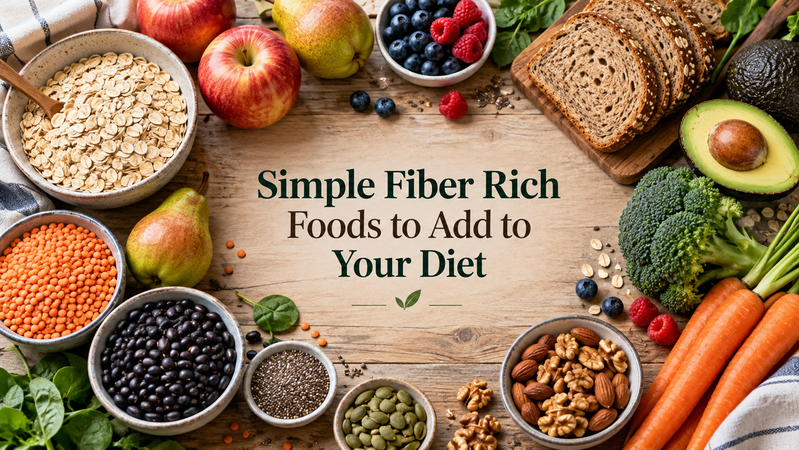
Eating a balanced diet is not only about counting calories or avoiding certain foods. It is also about giving your body the nutrients it needs to function properly every day. One nutrient that deserves more attention is dietary fiber. Adding simple fiber rich foods to your diet can support digestion, help you feel satisfied after meals, and make your daily eating routine more balanced.
Fiber is naturally found in many plant based foods, including fruits, vegetables, whole grains, beans, lentils, nuts, and seeds. The good thing is that you do not need expensive ingredients or complicated recipes to increase your fiber intake. Many everyday foods are naturally rich in fiber and can easily become part of breakfast, lunch, dinner, or snacks.
The best approach is to add fiber gradually and choose a variety of foods. This makes meals more interesting and provides other important nutrients at the same time.
What Is Dietary Fiber?
Dietary fiber is a type of carbohydrate found mainly in plant foods. Unlike many other carbohydrates, fiber is not completely broken down and absorbed by the body during digestion. Instead, it moves through the digestive system and plays several useful roles.
There are different types of fiber, but they are often grouped into soluble and insoluble fiber.
Soluble fiber can absorb water and form a soft, gel like substance in the digestive tract. Foods such as oats, beans, apples, and citrus fruits contain useful amounts of soluble fiber.
Insoluble fiber adds bulk to food as it moves through the digestive system. Whole grains, vegetables, nuts, and many fruit skins contain insoluble fiber.
Rather than worrying too much about individual types, I find it more practical to eat a wide range of natural plant foods. A varied diet usually provides a healthy mixture of different fibers.
Why Fiber Rich Foods Matter
Fiber rich foods can be valuable in everyday meals because they often make food more filling and satisfying. A breakfast containing whole grains and fruit, for example, may keep you satisfied longer than a highly refined breakfast with very little fiber.
Fiber also contributes to normal digestive function. When combined with enough fluids, fiber can help food move through the digestive system more comfortably.
Another advantage is that many high fiber foods also provide vitamins, minerals, antioxidants, and plant compounds. This means you are not adding only fiber when you choose beans, vegetables, fruits, or whole grains. You are improving the overall nutritional quality of the meal.
The key is consistency. Eating one high fiber meal occasionally is less useful than regularly including fiber rich foods throughout the week.
Oats Are an Easy Breakfast Choice
Oats are one of the simplest fiber rich foods to include in your diet. They are affordable, easy to prepare, and suitable for many breakfast combinations.
A warm bowl of oatmeal can be topped with banana, apple, berries, nuts, or seeds. This combination naturally increases the fiber content of the meal while adding flavor and texture.
Overnight oats are another convenient option for busy mornings. Oats can be mixed with milk or yogurt and left in the refrigerator overnight. Fruit can then be added before eating.
You can also use oats in homemade muffins, breakfast bars, pancakes, or smoothies.
Choosing plain oats allows you to control the amount of added sugar and create your own flavors with natural ingredients.
Beans Are Simple and Versatile
Beans are among the most useful foods for increasing dietary fiber. Black beans, kidney beans, white beans, chickpeas, and other varieties can be included in many everyday dishes.
Beans work well in soups, salads, curries, wraps, rice dishes, and vegetable bowls. They can also be mashed and used as a filling for sandwiches or wraps.
Canned beans are convenient when there is little time for cooking. Draining and rinsing them before use can make them ready for salads or quick meals within minutes.
Dry beans require more preparation, but they are often economical for families that cook in larger quantities.
Combining beans with vegetables and whole grains can create a filling meal without requiring complicated ingredients.
Lentils Are Excellent for Everyday Meals
Lentils are another easy fiber rich food that deserves a regular place in the kitchen. They cook faster than many dried beans and work well with different herbs, vegetables, and seasonings.
Lentil soup is probably one of the easiest ways to enjoy them. Carrots, tomatoes, onions, spinach, and other vegetables can be added for extra flavor and nutrition.
Lentils can also be served with brown rice, added to salads, used in vegetable dishes, or included in homemade patties.
Because lentils have a mild flavor, they can easily absorb the seasonings used in a recipe. This makes them suitable for many styles of home cooking.
Apples Make a Convenient Fiber Rich Snack
Fruit is one of the easiest ways to add more fiber without changing your entire eating routine. Apples are particularly convenient because they require almost no preparation.
Whenever practical, eating an apple with its edible skin can provide more fiber than removing the skin.
An apple can be eaten on its own or paired with a small amount of peanut butter, yogurt, or nuts for a more satisfying snack.
Sliced apples also work well in oatmeal and breakfast bowls. They can even be added to homemade salads for a slightly sweet flavor.
Keeping fresh fruit visible in the kitchen may make it easier to choose it when hunger appears between meals.
Pears Are Naturally Fiber Rich
Pears are another simple fruit that can increase the fiber content of your daily meals. They are naturally sweet and can be enjoyed fresh without additional ingredients.
A ripe pear makes a convenient snack for work, school, or home. Chopped pears can also be added to oatmeal, yogurt bowls, or fruit salads.
Like apples, pears can often be eaten with their edible skin after proper washing.
Using different fruits during the week is a simple way to prevent your meals from becoming repetitive while still maintaining a good fiber intake.
Berries Add Flavor and Fiber
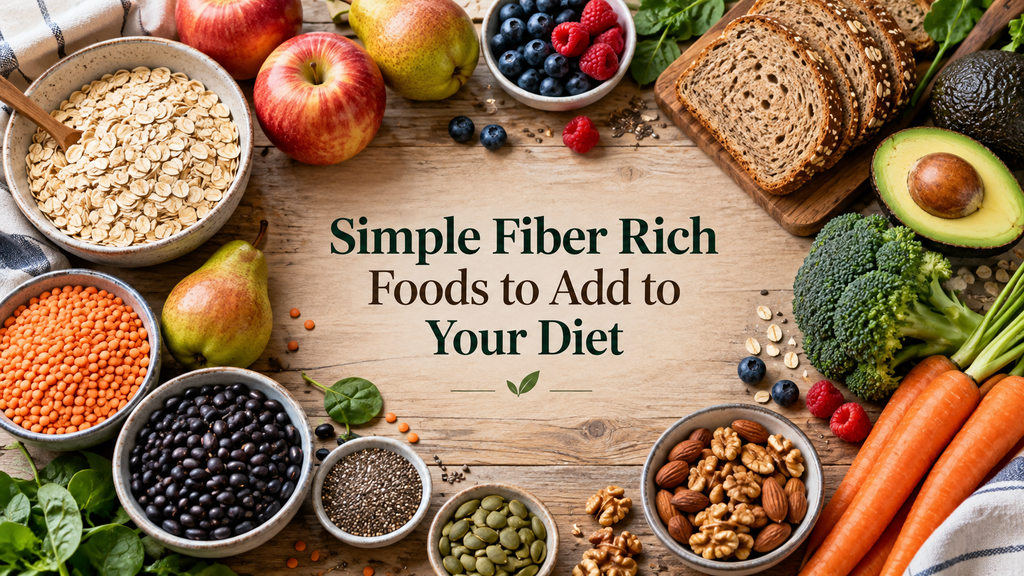
Strawberries, raspberries, blackberries, and blueberries are useful additions to a fiber rich diet. They can be enjoyed fresh or frozen depending on availability and season.
Berries are easy to add to oatmeal, yogurt, smoothies, or whole grain cereal. They can also be eaten as a refreshing snack.
Frozen berries can be particularly useful because they can stay available for longer periods and can be added directly to smoothies or cooked breakfast dishes.
Mixing different berries with other fruits can create a naturally colorful and enjoyable bowl without needing heavy syrups or excessive added sugar.
Vegetables Should Be Part of Main Meals
Vegetables are an important source of dietary fiber and should not be limited to small side dishes.
Broccoli, carrots, peas, cauliflower, leafy greens, cabbage, sweet potatoes, and many other vegetables can contribute fiber to everyday meals.
One simple strategy is to increase the vegetable portion of foods you already prepare. If you are making rice, pasta, soup, curry, or an omelet, additional vegetables can often be included without completely changing the recipe.
Roasted vegetables can also make an easy side dish. Carrots, broccoli, cauliflower, zucchini, or other vegetables can be cooked with a small amount of oil and simple seasoning.
The goal is not to prepare perfect meals. It is simply to make vegetables a normal part of your eating routine.
Sweet Potatoes Are Filling and Easy to Prepare
Sweet potatoes are naturally flavorful and provide dietary fiber along with several useful nutrients.
They can be baked, roasted, mashed, or added to soups and vegetable bowls. Keeping the edible skin when appropriate can provide additional fiber.
A baked sweet potato can become a simple meal when topped with beans and vegetables. This combination is easy to prepare and offers fiber from several ingredients.
Sweet potatoes also work well as a side dish for lunch or dinner and can be seasoned according to personal preference.
Whole Grain Bread Is a Simple Swap
One of the easiest changes for increasing fiber is replacing highly refined bread with a whole grain option.
Whole grain bread can be used for sandwiches, toast, and simple breakfast meals. It can be topped with eggs, avocado, nut butter, vegetables, or other nutritious foods.
When buying packaged bread, it is useful to read the ingredient list instead of relying only on the color of the bread. Brown colored bread is not always made mainly from whole grains.
Choosing a product where whole grain ingredients are clearly listed can help you make a more informed choice.
Brown Rice Can Replace Refined Rice Sometimes
Rice is a common part of meals around the world. Brown rice retains more of the grain than highly refined white rice and can provide additional fiber.
You do not necessarily need to stop eating white rice. Instead, brown rice can sometimes be used as an alternative.
It can be served with beans, lentils, vegetables, chicken, fish, or other favorite foods.
People who are not accustomed to the texture of brown rice may prefer mixing it with white rice at first. Gradually changing the ratio can make the transition easier.
Whole Grain Pasta Can Increase Fiber
Pasta can also contribute more fiber when whole grain varieties are chosen.
Whole grain pasta can be prepared in the same basic way as regular pasta and paired with tomato sauce, vegetables, beans, or lean protein sources.
Adding vegetables such as spinach, mushrooms, tomatoes, peppers, broccoli, or peas can further improve the nutritional quality of the meal.
A pasta dish does not need to be heavy or complicated. Simple ingredients can create a balanced and satisfying meal.
Chickpeas Are Useful Beyond Salads
Chickpeas are commonly used in salads, but there are many other ways to enjoy them.
They can be roasted for a crunchy snack, blended into hummus, added to soups, mixed with rice, or included in vegetable dishes.
Hummus can be served with vegetables, whole grain bread, or used as a spread in sandwiches.
Roasted chickpeas can provide an alternative to heavily processed snack foods when you want something crunchy.
Keeping canned or cooked chickpeas available can make it easier to add fiber to meals without much preparation.
Nuts Can Add Fiber to Snacks
Almonds, walnuts, pistachios, peanuts, and other nuts contain fiber along with healthy fats and other nutrients.
A small portion can be added to oatmeal, yogurt, fruit bowls, or salads. Nuts can also be eaten with fresh fruit as a simple snack.
Because nuts are energy dense, moderate portions are generally enough.
Unsalted or lightly salted varieties may be preferable for everyday use when you want more control over sodium intake.
Seeds Are Small but Useful
Seeds are another easy way to add fiber to foods you already eat.
Chia seeds, flaxseeds, sunflower seeds, and pumpkin seeds can be included in different meals. Chia seeds can be mixed into oatmeal, yogurt, smoothies, or homemade pudding.
Ground flaxseed can be added to cereal, oatmeal, or baked foods.
Seeds are especially useful because they require little preparation. A small amount can easily be added to breakfast without changing the entire meal.
Popcorn Can Be a Whole Grain Snack
Popcorn may surprise some people, but plain popcorn is a whole grain food and can contribute dietary fiber.
The way it is prepared makes a difference. Popcorn covered with large amounts of butter, sugar, or salt can quickly become very different from simple air popped popcorn.
Plain popcorn seasoned lightly with herbs or spices can be an enjoyable snack.
It can be particularly useful when you want something light and crunchy between meals.
Avocado Adds Fiber and Creamy Texture
Avocado is known for its creamy texture, but it also contributes fiber to the diet.
It can be spread on whole grain toast, added to salads, mashed into a dip, or included in wraps.
Combining avocado with vegetables and whole grains can create satisfying meals with different textures and flavors.
Because avocado is naturally rich, a moderate portion is usually enough to improve a meal.
How to Add More Fiber Without Making Dieting Difficult
Increasing fiber should not feel like a complete diet transformation. Small changes are often easier to maintain.
You could start by choosing oatmeal for breakfast a few times per week. Add a piece of fruit to your afternoon snack. Include beans or lentils with lunch. Add an extra vegetable to dinner.
These small choices can gradually increase the amount of fiber in your daily diet.
Another useful idea is to keep convenient fiber rich ingredients at home. Oats, canned beans, lentils, whole grain bread, frozen vegetables, fruit, nuts, and seeds can provide several quick meal combinations.
When nutritious ingredients are available, preparing balanced meals becomes easier.
Increase Fiber Gradually
If your current diet contains very little fiber, suddenly eating large amounts may cause digestive discomfort for some people.
A gradual approach is usually more comfortable. Add one or two fiber rich foods at a time and allow your eating routine to adjust.
Drinking enough fluids is also important when increasing dietary fiber. Water supports normal digestion and works together with fiber as it moves through the digestive system.
Your goal should be steady improvement rather than trying to dramatically change everything in a single day.
Create Variety Throughout the Week
No single food needs to provide all the fiber in your diet.
One day you might eat oats, apples, lentils, and carrots. Another day could include whole grain bread, pears, chickpeas, broccoli, and brown rice.
This variety makes meals more enjoyable and also exposes your body to a wider range of nutrients.
Choosing seasonal fruits and vegetables can also help control food costs and keep meals interesting.
Final Thoughts
Adding simple fiber rich foods to your diet does not require complicated recipes, expensive products, or strict eating rules. Many familiar foods can naturally increase your fiber intake when included regularly.
Oats, beans, lentils, apples, pears, berries, vegetables, sweet potatoes, whole grains, chickpeas, nuts, seeds, popcorn, and avocado are all practical options.
The easiest method is to make small improvements to meals you already enjoy. Choose whole grains more often, add vegetables to main dishes, keep fruit available for snacks, and include beans or lentils several times during the week.
A healthy eating routine is usually built through consistent everyday choices rather than extreme changes. By slowly adding more fiber rich foods and maintaining variety, you can create meals that are nutritious, satisfying, practical, and enjoyable for the whole family.