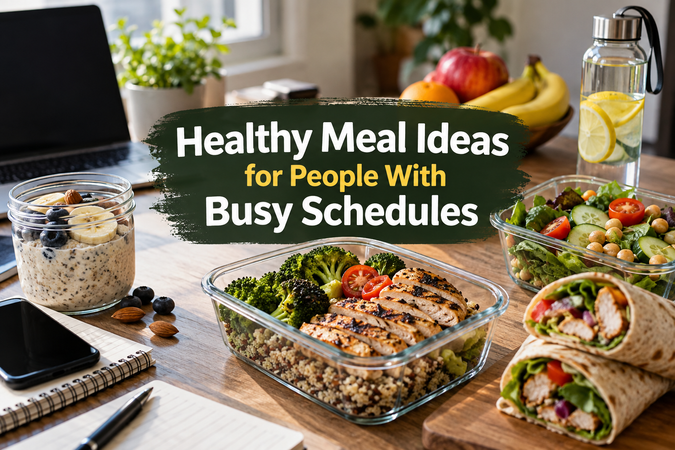
Living a busy life can make healthy eating feel difficult. When work, study, family responsibilities, travel, and daily tasks fill most of the day, preparing nutritious meals may seem like one more responsibility that requires too much time. It becomes tempting to order fast food, skip meals, or depend on packaged snacks simply because they are convenient.
However, healthy eating does not have to involve complicated recipes or hours in the kitchen. Some of the best healthy meal ideas for people with busy schedules are surprisingly simple. With thoughtful planning, basic ingredients, and a few reliable meal combinations, it is possible to eat satisfying and nutritious food even during the busiest weeks.
The key is not to prepare perfect meals every day. The goal is to create a practical eating routine that fits naturally into your schedule.
Start With Simple Meal Planning
Meal planning is one of the easiest ways to make healthy eating more manageable. You do not need to plan every snack and ingredient for the entire week. Even deciding what you will eat for breakfast, lunch, and dinner for the next two or three days can make a big difference.
When there is already a basic plan, you are less likely to spend time wondering what to cook when you are hungry and tired.
Choose meals that share similar ingredients. For example, cooked chicken can be used in a rice bowl one day, a salad the next day, and a whole grain wrap later in the week. Vegetables can also be prepared once and added to several different meals.
This type of flexible planning saves both preparation time and food.
Prepare Overnight Oats for Busy Mornings
Overnight oats are one of the most convenient healthy breakfast options for people with busy schedules.
Simply combine rolled oats with milk or yogurt and leave the mixture in the refrigerator overnight. In the morning, add fruit, nuts, seeds, or a small amount of cinnamon.
Bananas, strawberries, apples, blueberries, and peaches all work well.
Oats provide fiber and carbohydrates, while yogurt or milk adds protein. Fruit contributes natural sweetness along with vitamins and minerals.
The best part is that there is almost no cooking involved.
You can prepare several containers at once and keep them in the refrigerator for upcoming mornings.
Make Quick Egg and Vegetable Breakfasts
Eggs are another useful ingredient for quick and healthy meals.
Scrambled eggs can be prepared in only a few minutes. Add chopped spinach, tomatoes, onions, mushrooms, or bell peppers to increase the vegetable content.
Serve the eggs with whole grain toast and fresh fruit for a balanced breakfast.
Boiled eggs are even more convenient because they can be prepared ahead of time and stored in the refrigerator. In the morning, pair them with toast, fruit, yogurt, or sliced vegetables.
Simple breakfasts like these are often more practical than recipes that require many ingredients and long preparation times.
Keep Yogurt and Fruit Ready
On mornings when cooking feels impossible, yogurt and fruit can provide a quick alternative.
Place plain yogurt in a bowl and add chopped fruit, oats, nuts, or seeds. This takes only a few minutes and can be eaten at home or packed into a container.
Greek style yogurt is especially useful when you want additional protein.
Try different fruit combinations throughout the week to keep breakfast interesting.
You can also add a small spoonful of nut butter for extra richness and flavor.
Use Smoothies as Convenient Meals
Smoothies can be useful when you need something quick but still want nutritious ingredients.
A simple smoothie might include banana, berries, milk, yogurt, oats, and a spoonful of peanut butter.
Leafy greens such as spinach can also be blended into fruit smoothies without making preparation complicated.
To save even more time, place individual portions of fruit in containers or freezer bags beforehand. When you need a smoothie, simply place the ingredients in a blender, add liquid, and blend.
Smoothies can be especially helpful during busy mornings when sitting down for a traditional breakfast is difficult.
Build Healthy Rice Bowls
Rice bowls are one of the most flexible healthy meal ideas for busy people.
Begin with cooked rice, brown rice, quinoa, or another grain. Add a source of protein such as chicken, beans, lentils, eggs, fish, or tofu. Then include vegetables and a simple sauce or dressing.
For example, you might combine rice with grilled chicken, cucumber, tomato, carrots, and yogurt sauce.
Another option is brown rice with black beans, corn, tomatoes, lettuce, and avocado.
Because the basic ingredients can be prepared ahead of time, assembling the final meal usually takes only a few minutes.
Make Easy Whole Grain Wraps
Wraps are excellent for lunch because they are quick to prepare, portable, and easy to customize.
Use a whole grain tortilla and add protein, vegetables, and a flavorful spread.
Chicken with lettuce, tomato, cucumber, and yogurt dressing creates a simple combination.
You can also make a vegetarian wrap using beans, hummus, spinach, carrots, and bell peppers.
Leftover roasted vegetables or cooked meat can easily be turned into a wrap the following day.
This makes wraps particularly useful for reducing food waste while saving preparation time.
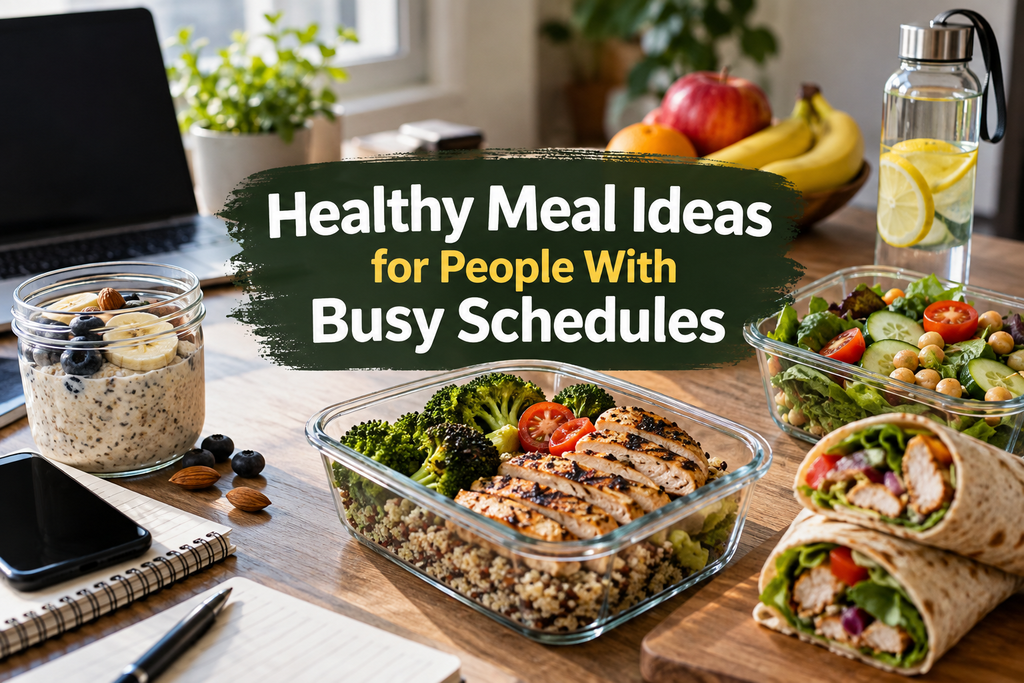
Prepare Salads That Are Actually Filling
A small bowl of lettuce may not provide enough energy to keep you satisfied throughout a busy afternoon. A better approach is to create a complete salad containing several food groups.
Start with leafy greens and add vegetables such as cucumber, tomatoes, carrots, peppers, cabbage, or broccoli.
Next, add protein. Good options include chicken, eggs, tuna, chickpeas, beans, lentils, or tofu.
You can then include healthy fats from avocado, nuts, seeds, or olive oil.
A small portion of whole grains such as quinoa or brown rice can make the salad even more satisfying.
Preparing chopped vegetables in advance makes salad assembly much quicker during the week.
Try One Pot Meals
One pot cooking can save both preparation time and cleaning time.
Soups, stews, rice dishes, pasta dishes, and lentil meals can often be prepared using only one cooking pot.
For example, a simple lentil soup can include lentils, carrots, tomatoes, onions, potatoes, and basic seasonings.
Another option is a vegetable and chicken rice dish made with chicken pieces, rice, peas, carrots, onions, and herbs.
One pot meals are particularly useful because larger portions can be prepared and stored for later.
Instead of cooking every evening, you can cook once and enjoy the meal more than once.
Cook Larger Portions When You Have Time
Batch cooking is one of the most effective strategies for people with demanding schedules.
When you have some free time, prepare larger portions of basic ingredients.
Cook a pot of rice or quinoa. Roast a tray of vegetables. Prepare chicken, beans, lentils, or another protein source. Store everything separately in suitable containers.
During the next few days, these foods can be combined in different ways.
Rice and chicken can become a grain bowl one evening. The chicken can be placed in a wrap for lunch. The vegetables can be added to eggs the following morning.
The goal is to prepare useful ingredients rather than cooking seven completely different meals in advance.
This keeps meals flexible while reducing daily kitchen work.
Use Healthy Freezer Meals
Your freezer can become an important tool when your schedule is unpredictable.
Soups, stews, cooked beans, lentils, casseroles, and some rice dishes can usually be frozen in individual portions.
When preparing dinner, make extra and freeze what you do not need immediately.
On an especially busy evening, you can reheat a homemade frozen meal instead of ordering something simply because there is no time to cook.
Label containers with the meal name and date so that you can easily see what is available.
Keep Canned Beans Available
Healthy meals do not always require fresh ingredients or lengthy cooking.
Canned beans can save significant time.
Chickpeas, kidney beans, black beans, and other beans can be rinsed and added directly to salads, wraps, soups, rice bowls, or vegetable dishes.
For a simple lunch, combine chickpeas with cucumber, tomatoes, onions, herbs, and a light dressing.
For dinner, mix black beans with rice, vegetables, and avocado.
Keeping convenient ingredients available makes healthy cooking much easier when time is limited.
Make Fast Pasta Meals Healthier
Pasta is popular among busy people because it cooks quickly.
It can also be part of a balanced meal.
Choose whole grain pasta when possible and combine it with vegetables and protein.
For example, prepare pasta with tomato sauce, spinach, mushrooms, onions, and cooked chicken.
Another option is pasta with broccoli, peas, beans, and a small amount of olive oil.
Adding vegetables increases the volume and nutritional variety of the meal without making preparation much more difficult.
Turn Leftovers Into New Meals
Leftovers should not always feel like eating exactly the same dinner again.
With a little creativity, yesterday’s food can become today’s new meal.
Roasted chicken can become a wrap.
Cooked vegetables can be added to an omelet.
Rice can become a vegetable rice bowl.
Beans can be added to salad or soup.
Remaining fruit can be used in smoothies or oatmeal.
Using leftovers intelligently saves time, reduces waste, and makes meal planning easier.
Keep Quick Healthy Snacks Nearby
Busy schedules often create long gaps between meals. When hunger becomes intense, it becomes harder to make thoughtful food choices.
Keeping simple snacks nearby can help.
Fresh fruit is one of the easiest options. Apples, bananas, oranges, grapes, and pears require very little preparation.
Other practical choices include yogurt, boiled eggs, nuts, roasted chickpeas, sliced vegetables, hummus, or whole grain crackers.
A snack does not have to be complicated. Its purpose is simply to provide something satisfying until your next meal.
Keep Your Kitchen Stocked With Basic Foods
Healthy eating becomes much easier when useful ingredients are already available.
A practical kitchen might regularly contain oats, rice, whole grain pasta, eggs, beans, lentils, canned tuna, frozen vegetables, yogurt, fruit, whole grain bread, nuts, and basic seasonings.
Fresh vegetables can be purchased according to what is affordable and available.
Frozen produce is also valuable for busy households because it lasts longer and requires little preparation.
Having reliable ingredients at home reduces the temptation to depend completely on convenience food.
Choose Simplicity Over Perfection
One reason people struggle with healthy eating is that they believe every meal needs to look impressive.
It does not.
A simple meal of scrambled eggs, whole grain toast, vegetables, and fruit can be nutritious.
Rice with beans and vegetables can be nutritious.
Yogurt with fruit, oats, and nuts can be nutritious.
Healthy meals do not need complicated recipes, expensive ingredients, or beautiful presentation.
For people with busy schedules, simplicity is often the most sustainable approach.
Create a Routine That Fits Your Life
There is no single meal routine that works for everyone.
Someone who works early in the morning may benefit from preparing breakfast the night before. A person with a busy afternoon schedule may need a packed lunch and several easy snacks. Someone who returns home late might rely more heavily on batch cooking and freezer meals.
Pay attention to the parts of your day when healthy eating becomes difficult.
Then create solutions specifically for those moments.
If mornings are difficult, prepare overnight oats.
If lunch is the problem, pack a rice bowl the night before.
If dinner becomes stressful, cook larger portions on less busy days.
Small adjustments are often more effective than completely changing your eating habits.
Final Thoughts
Finding healthy meal ideas for people with busy schedules is mainly about making nutritious food convenient. You do not need to spend hours preparing complicated meals to improve your daily eating routine.
Simple foods such as oats, eggs, yogurt, fruit, vegetables, rice, beans, lentils, whole grains, and easy protein sources can be combined in many different ways.
Meal planning, batch cooking, using leftovers, keeping freezer meals, and stocking convenient ingredients can reduce the amount of time spent preparing food each day.
Most importantly, choose meals that realistically fit your lifestyle. A healthy eating routine should make your life easier, not create additional stress.
When simple nutritious options are prepared and easily available, making better food choices becomes much more natural, even during the busiest days.