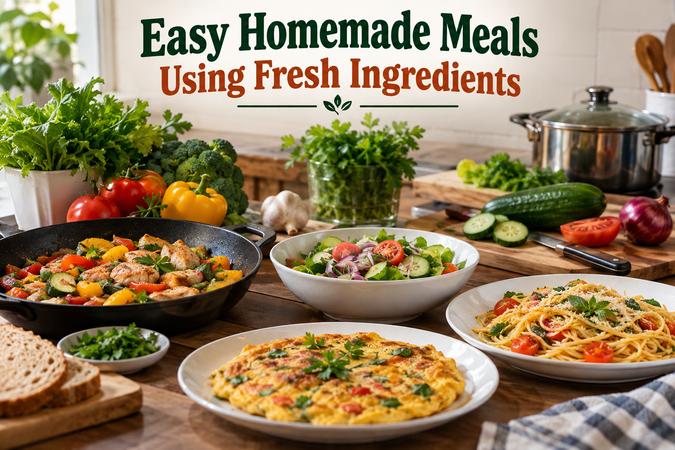
Cooking at home is one of the simplest ways to enjoy fresh, comforting, and satisfying food every day. You do not need advanced cooking skills or expensive ingredients to prepare delicious meals. With a few fresh vegetables, fruits, herbs, grains, eggs, dairy products, or other everyday ingredients, you can create many easy homemade meals that fit naturally into a balanced lifestyle.
I have always felt that homemade food has a special quality that packaged or heavily processed meals cannot easily replace. When we prepare food ourselves, we can see exactly what goes into the dish. We can choose fresh ingredients, adjust the seasoning, control the amount of oil, and prepare portions according to our needs.
The idea behind easy homemade meals using fresh ingredients is not to spend hours in the kitchen. It is about learning how to combine simple foods in practical ways. Once you understand a few basic cooking methods, preparing fresh meals becomes much easier.
Why Fresh Ingredients Make Homemade Meals Better
Fresh ingredients can improve both the taste and appearance of a meal. A ripe tomato has a natural sweetness and slight acidity. Fresh herbs provide fragrance and color. Crisp vegetables add texture, while fresh fruits bring natural sweetness to breakfasts, salads, and snacks.
Using fresh ingredients also encourages variety. When you visit a grocery store or local market, you may find different vegetables and fruits depending on the season. This gives you an opportunity to change your meals throughout the year instead of eating the same dishes every day.
Fresh food does not have to mean complicated food. Even a simple bowl of rice topped with cooked vegetables and an egg can become a complete homemade meal when prepared carefully.
Start With Simple Ingredients
One of the easiest ways to make homemade cooking less stressful is to keep basic ingredients available.
I like the idea of building meals around foods that can be used in several different recipes. Tomatoes, onions, potatoes, carrots, spinach, bell peppers, cucumbers, garlic, lemons, and fresh herbs are good examples.
Rice, pasta, oats, bread, beans, lentils, eggs, yogurt, and cheese can also help form the base of many easy meals.
When your kitchen contains flexible ingredients, you do not need a completely different shopping list for every recipe.
For example, tomatoes can be used in pasta sauce, vegetable soup, egg dishes, sandwiches, salads, and rice meals. Spinach can be added to eggs, pasta, soup, rice, wraps, or salads.
This flexibility makes homemade cooking easier and can also help reduce food waste.
Fresh Vegetable Omelet for Breakfast
A vegetable omelet is one of the easiest homemade meals you can prepare in the morning.
Start by chopping fresh tomatoes, onions, bell peppers, spinach, or any vegetables you have available. Lightly cook the vegetables in a pan until they become slightly soft.
Beat two or three eggs in a bowl and season them with a little salt and black pepper. Pour the eggs over the vegetables and cook until the omelet is firm.
You can add fresh herbs or a small amount of cheese if you like.
Serve the omelet with whole grain toast, sliced cucumber, or fresh fruit.
This type of breakfast is simple, colorful, and filling. It also gives you an easy way to include vegetables early in the day.
Simple Tomato and Herb Pasta
Pasta is useful when you want a quick homemade dinner without complicated preparation.
Instead of relying on a ready made sauce, you can prepare a simple fresh tomato sauce at home.
Chop ripe tomatoes, garlic, and onions. Heat a small amount of olive oil in a pan and cook the onions until soft. Add garlic and tomatoes and allow everything to cook gently.
As the tomatoes soften, they create a natural sauce.
Add black pepper, fresh basil, parsley, or other herbs according to your taste.
Cook your pasta separately and mix it with the fresh tomato sauce.
You can add spinach, mushrooms, zucchini, or bell peppers to make the meal more colorful.
This is a good example of how a few simple ingredients can create a satisfying homemade meal.
Easy Rice Bowl With Fresh Vegetables
Rice bowls are practical because you can change the ingredients depending on what you have in your refrigerator.
Start with cooked rice. Brown rice, white rice, or another grain can all work.
Add lightly cooked vegetables such as carrots, broccoli, spinach, peas, corn, or bell peppers.
You can then add a protein source such as eggs, beans, lentils, chicken, tofu, or another option you enjoy.
Finish the bowl with fresh cucumber, tomatoes, herbs, lemon juice, or a spoonful of plain yogurt.
What makes rice bowls useful is their flexibility. You can prepare them differently each time while following the same basic method.
Fresh Vegetable Soup
Soup is another easy homemade meal that works especially well when you have several vegetables that need to be used.
Begin with onions and garlic. Add chopped carrots, potatoes, tomatoes, celery, peas, beans, or seasonal vegetables.
Cover the vegetables with water or a simple broth and allow them to cook until tender.
You can add herbs and spices according to your preference.
Some people enjoy chunky soup, while others prefer blending part of the mixture for a smoother texture.
Serve your soup with fresh bread or a simple side salad.
Homemade vegetable soup is also a practical way to use small amounts of leftover vegetables before they lose their freshness.
Homemade Chicken and Vegetable Skillet
A skillet meal is useful when you want to prepare everything in one pan.
Cut chicken into small pieces and cook it until properly done. Remove it temporarily from the pan if necessary.
Add onions, bell peppers, zucchini, carrots, tomatoes, mushrooms, or other fresh vegetables.
Cook the vegetables until they reach the texture you prefer. Return the chicken to the pan and season everything with herbs, black pepper, garlic, lemon juice, or your favorite spices.
You can serve the mixture with rice, potatoes, bread, or pasta.
The vegetables provide color and texture while the chicken makes the dish more filling.
Simple Lentil and Vegetable Meal
Lentils are useful for affordable homemade meals because they combine easily with fresh ingredients.
Cook lentils with onions, tomatoes, garlic, carrots, and mild spices. You can also add spinach toward the end of cooking.
Serve the lentils with rice, bread, or a fresh salad.
A squeeze of lemon can brighten the flavor.
Lentil dishes can also be prepared in larger portions and stored for another meal, making them convenient for busy days.
Fresh Homemade Salad With a Filling Base
Salad does not have to be only a side dish.
A filling homemade salad can include fresh lettuce, cucumber, tomatoes, carrots, cabbage, bell peppers, or spinach.
Add cooked beans, chickpeas, eggs, chicken, cheese, or another protein source.
You can also include rice, pasta, potatoes, or grains if you want a more substantial meal.
For a simple dressing, combine lemon juice with a little olive oil, black pepper, and herbs.
Fresh fruit such as apple, orange, or grapes can also add sweetness and variety.
The key is to combine different textures. Crisp vegetables, soft beans, fresh herbs, and a simple dressing can turn an ordinary salad into a satisfying meal.
Baked Potatoes With Fresh Toppings
Potatoes are simple, affordable, and easy to combine with fresh ingredients.
Bake whole potatoes until the inside becomes soft. Cut them open and add toppings such as chopped tomatoes, cucumber, fresh herbs, yogurt, beans, cooked vegetables, or cheese.
You can create several combinations depending on your preferences.
A baked potato with fresh toppings requires little preparation, but it still feels like a complete homemade meal.
Homemade Wraps Using Fresh Ingredients
Wraps are useful for lunch because they are quick to prepare and easy to customize.
Use a tortilla or flatbread and fill it with fresh lettuce, cucumber, tomatoes, shredded carrots, cabbage, and herbs.
Add cooked chicken, eggs, beans, chickpeas, or cheese.
A spoonful of yogurt mixed with herbs and lemon juice can work as a simple homemade sauce.
Roll everything together and serve immediately.
Wraps are also helpful when you have small portions of cooked ingredients left from another meal.
Keep Cooking Methods Simple
You do not need complicated techniques to prepare easy homemade meals.
Roasting, boiling, steaming, baking, sautéing, and grilling are enough for a wide range of dishes.
Roasting vegetables can bring out their natural sweetness. Steaming keeps vegetables tender without requiring much oil. Sautéing is useful when you need a meal quickly.
Learning a few simple cooking methods gives you the confidence to work with whatever fresh ingredients are available.
Use Herbs and Spices for Natural Flavor
Fresh ingredients already have their own flavors, so they often need only simple seasoning.
Garlic, ginger, parsley, basil, coriander, mint, black pepper, paprika, cumin, and lemon juice can change the character of a meal without making the recipe complicated.
Fresh herbs are especially useful because they add fragrance and color.
Instead of using too many seasonings at once, start with small amounts and taste the food as it cooks.
Over time, you naturally learn which combinations you enjoy most.
Plan Meals Around What You Already Have
One habit that can make homemade cooking much easier is checking your kitchen before deciding what to prepare.
Look at the vegetables in your refrigerator and the grains, beans, pasta, or other foods in your cupboard.
Then build your meal around ingredients that should be used first.
If you have spinach, tomatoes, eggs, and bread, you might prepare a vegetable omelet.
If you have carrots, potatoes, onions, and beans, you could make soup.
If you have rice, cucumber, tomatoes, and leftover chicken, you could prepare a rice bowl.
Cooking this way can save money and reduce unnecessary waste.
Prepare Some Ingredients in Advance
Homemade meals become much easier when a few basic ingredients are ready to use.
You can wash vegetables, cook rice, prepare beans, boil eggs, or chop certain ingredients ahead of time.
Store them properly in the refrigerator so they can be added to meals when needed.
This does not mean preparing every meal several days in advance. Even preparing one or two basic ingredients can reduce cooking time.
For example, cooked rice from one meal can become the base of a vegetable bowl the next day.
Choose Seasonal Fresh Ingredients
Seasonal produce can be useful for homemade cooking because it often offers good flavor and variety.
Different seasons naturally encourage different types of meals.
Warm weather may inspire fresh salads, fruit bowls, vegetable wraps, and light pasta dishes.
Cooler weather may be better suited to soups, roasted vegetables, lentils, and baked meals.
You do not have to follow strict seasonal rules. The main idea is simply to notice what fresh ingredients are easily available and use them creatively.
Make Homemade Cooking Enjoyable
Cooking should not feel like a difficult daily task.
Start with meals you already understand and slowly experiment with new ingredients.
You might try a different vegetable in your pasta, add fresh herbs to your eggs, or create a new combination for your rice bowl.
Small changes keep meals interesting without requiring complicated recipes.
It also helps to keep your kitchen organized. When ingredients and cooking tools are easy to find, preparing meals feels much simpler.
Final Thoughts
Easy homemade meals using fresh ingredients do not require professional cooking skills or complicated recipes. The best approach is to begin with simple foods and combine them in practical ways.
Fresh vegetables, fruits, grains, eggs, beans, lentils, herbs, and other everyday ingredients can be turned into countless meals. Vegetable omelets, homemade pasta, rice bowls, soups, salads, wraps, lentil dishes, and simple skillet meals are only a few examples.
The more often you cook with fresh ingredients, the easier it becomes to understand flavors and create meals without depending completely on recipes.
Homemade cooking is really about making good use of what you have. A few fresh ingredients, simple cooking methods, and a little creativity can help you prepare enjoyable meals for breakfast, lunch, or dinner.
Instead of trying to make every meal perfect, focus on keeping it fresh, simple, and satisfying. Over time, these small cooking habits can become a natural part of everyday life.