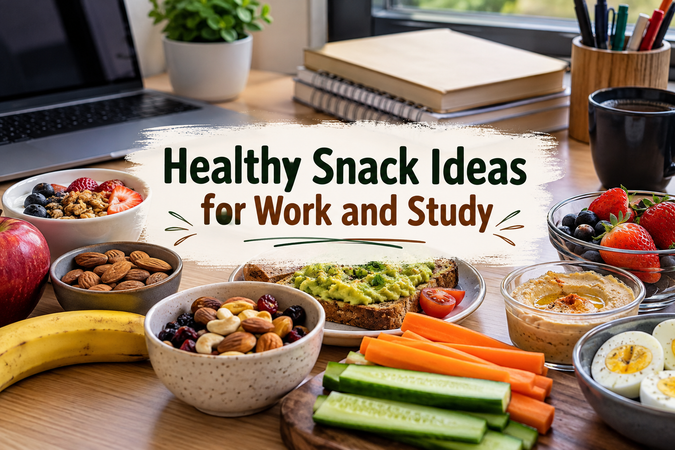
Long hours of work and study can make it difficult to maintain steady energy throughout the day. When I spend several hours concentrating on a task, I often notice that hunger appears between regular meals. At that moment, choosing the right snack can make a big difference. A healthy snack can provide useful nutrients, satisfy hunger, and help me stay focused until the next meal.
Healthy snack ideas for work and study do not need to be complicated. Simple foods such as fruit, yogurt, nuts, vegetables, eggs, and whole grains can become practical snacks with very little preparation. The important thing is to select foods that provide nourishment rather than depending only on highly processed options.
Planning snacks in advance can also make healthy eating easier. When nutritious food is available nearby, there is less temptation to choose whatever is easiest. With a few simple habits, snacks can become a helpful part of a balanced daily routine.
Why Healthy Snacks Matter During Work and Study
Concentration requires both mental effort and physical energy. A person who works in an office, studies at home, attends classes, or spends several hours using a computer may become hungry between meals.
Ignoring hunger for too long can make it difficult to concentrate comfortably. On the other hand, eating a very heavy snack may leave a person feeling too full. This is why balanced snacks are useful.
A good snack often combines foods that contain protein, fiber, healthy fats, or naturally occurring carbohydrates. These nutrients can make a snack more satisfying.
For example, eating an apple alone can be refreshing, while combining the apple with a small portion of nuts can create a more filling snack. Simple combinations like this are practical for busy days.
Fresh Fruit for a Simple Snack
Fresh fruit is one of the easiest healthy snack ideas for work and study. Fruit requires little preparation and can easily be carried in a bag or lunch container.
Apples, bananas, oranges, pears, grapes, peaches, and berries are useful choices. Each fruit has its own flavor, texture, and nutrient profile.
Bananas are especially convenient because they do not need to be cut before eating. Apples and pears are also easy to carry and usually stay fresh for several hours when stored properly.
Berries can be packed in a small container after washing. Strawberries, blueberries, raspberries, and blackberries can be eaten alone or added to yogurt.
Changing the type of fruit throughout the week helps make snack time more interesting.
Yogurt With Fresh Fruit
Yogurt can be a convenient source of protein and calcium. It is also easy to combine with other foods.
A bowl of plain yogurt topped with sliced banana, berries, chopped apple, or another favorite fruit can become a refreshing snack.
For additional texture, a small amount of oats, seeds, or chopped nuts can be added.
Plain yogurt can be a useful option because it allows you to control what is added to the snack. The natural sweetness of fresh fruit may be enough for many people.
If yogurt is being taken to work or university, keeping it properly chilled is important.
Nuts for Busy Days
Nuts are small, portable, and easy to store, which makes them especially useful for people with busy schedules.
Almonds, walnuts, pistachios, cashews, and peanuts can all be enjoyed as snacks. Nuts contain healthy fats, protein, and several important nutrients.
Because nuts are quite filling, a small handful is often enough for a snack.
You can prepare individual portions at home and keep them in small containers. This makes it easier to grab one before leaving for work or class.
Unsalted or lightly salted varieties can be practical choices for everyday eating.
Apple Slices With Peanut Butter
Apple slices with peanut butter provide a pleasant combination of sweetness and richness.
The apple provides fiber and natural carbohydrates, while peanut butter adds protein and fat. Together, they create a satisfying snack that takes only a few minutes to prepare.
Slice a fresh apple and serve it with a spoonful of peanut butter. Peanut butter can either be spread directly on the slices or kept separately for dipping.
The same idea can be used with banana slices.
When purchasing peanut butter, reading the ingredient label can help you choose a simple product that suits your preferences.
Carrot and Cucumber Sticks
Vegetables can also make excellent snacks.
Carrots and cucumbers are affordable, refreshing, and easy to prepare. Wash them thoroughly and cut them into convenient sticks.
They can be eaten alone or served with a simple dip such as hummus or yogurt based dip.
Bell pepper slices, celery, cherry tomatoes, and radishes are other vegetables that work well in snack boxes.
Preparing vegetables ahead of time can make them much easier to eat during a busy work or study day.
Hummus With Vegetables
Hummus is commonly made from chickpeas and can be paired with a variety of vegetables.
Carrot sticks, cucumber slices, bell peppers, celery, and cherry tomatoes can all be served with a small portion of hummus.
This snack provides different textures and flavors while combining vegetables with a plant based source of protein.
A small container of hummus and vegetables can be prepared the night before and stored in the refrigerator.
It is an easy option for people who want something savory instead of sweet.
Boiled Eggs
Boiled eggs are another simple snack that can be prepared ahead of time.
Eggs contain protein and several important nutrients. One or two boiled eggs can provide a filling snack during a long day.
You can boil several eggs at once and store them properly in the refrigerator. This reduces preparation time during busy mornings.
A boiled egg can be combined with cucumber slices, tomatoes, or a piece of whole grain toast for a larger snack.
Because eggs require refrigeration, they should be kept cool when being carried for several hours.
Oatmeal for a Filling Snack
Oatmeal is often considered a breakfast food, but it can also be eaten as a healthy snack.
Oats contain fiber and can be prepared in many different ways.
A small bowl of oatmeal can be topped with banana slices, berries, cinnamon, nuts, or seeds. Milk or yogurt can also be added depending on personal preference.
Overnight oats are particularly convenient for busy people. Oats can be mixed with milk or yogurt in the evening and stored in the refrigerator overnight.
In the morning, the snack is ready to take along.
Whole Grain Toast With Toppings
Whole grain toast offers a simple base for several healthy snacks.
You can spread peanut butter on toast and add banana slices. Another option is mashed avocado with sliced tomato.
Yogurt based spreads, cottage cheese, or hummus can also be used.
Whole grain bread usually provides more fiber than highly refined bread, which can make the snack more satisfying.
The best topping depends on whether you prefer something sweet or savory.
Homemade Popcorn
Popcorn can be a light snack for work or study when prepared simply.
Plain popcorn made with a modest amount of oil can be prepared at home and placed in a container.
Different seasonings can be used to add flavor. Herbs, mild spices, or a small amount of seasoning can make popcorn more interesting.
Preparing popcorn at home also allows you to decide how much oil and seasoning to use.
It can be especially enjoyable during evening study sessions when you want something light and crunchy.
Cheese With Fruit or Whole Grain Crackers
Cheese can be combined with fruit or whole grain crackers to create a satisfying snack.
Apple slices, grapes, and pears pair well with many types of cheese.
A small portion of cheese with whole grain crackers can also be convenient for the workplace.
Combining different food groups often makes snacks more enjoyable because it provides a mixture of flavors and textures.
Portioning the cheese before leaving home makes the snack easier to manage during a busy day.
Homemade Trail Mix
Homemade trail mix is useful because it can be customized according to personal taste.
Start with nuts such as almonds, walnuts, peanuts, or cashews. Add seeds such as pumpkin or sunflower seeds.
A small amount of dried fruit such as raisins or chopped dates can provide natural sweetness.
Because dried fruit and nuts are concentrated foods, modest portions are generally enough.
Preparing trail mix at home gives you control over the ingredients and allows you to create a different mixture each week.
Dates With Nuts
Dates are naturally sweet and easy to carry.
One simple snack idea is to remove the seed from a date and place an almond or walnut inside.
The soft texture of dates and the crunch of nuts create an enjoyable combination.
A few dates with nuts can be enough when you want something sweet during study or office hours.
They can also be prepared in advance and placed in a small container.
Roasted Chickpeas
Roasted chickpeas are a crunchy snack that can be prepared at home.
Cooked chickpeas can be dried, lightly coated with oil, seasoned, and roasted until crisp.
Different spices can be used depending on your taste. Mild paprika, black pepper, garlic powder, or herbs can create different flavors.
Chickpeas provide plant based protein and fiber, making them a useful alternative to many packaged snacks.
Once cooled, roasted chickpeas can be stored in a container for convenient snacking.
Smoothies for Busy Mornings
A homemade smoothie can work well when there is very little time to prepare food.
Fruit, yogurt, milk, oats, and seeds can be blended into a convenient drink.
For example, banana, yogurt, oats, and milk create a simple smoothie. Berries can be added for extra flavor.
Smoothies are flexible because ingredients can be adjusted based on what is available at home.
However, whole foods are still valuable, so smoothies can be treated as one option among many rather than the only type of snack.
Keep Healthy Snacks at Your Desk
One of the easiest ways to improve snack choices is to keep suitable foods nearby.
Shelf stable foods such as nuts, roasted chickpeas, whole grain crackers, or homemade trail mix can sometimes be stored in a desk drawer.
Fresh foods such as yogurt, eggs, fruit, and vegetables may require refrigeration depending on the food and how long it will be stored.
Having healthy options available can reduce the temptation to buy highly processed snacks when hunger suddenly appears.
Prepare Snacks Before the Week Begins
A small amount of preparation can make healthy eating much easier during busy days.
At the beginning of the week, wash some fruit, prepare vegetables, boil eggs, portion nuts, or make a container of homemade trail mix.
You do not need to prepare every snack in advance. Even preparing two or three options can save time.
Using reusable containers can also make snacks easier to organize and carry.
When food is already prepared, choosing a nutritious snack requires much less effort.
Remember to Drink Water
Sometimes long periods of work or study can make people forget to drink enough water.
Keeping a reusable water bottle near your desk or study area can serve as a simple reminder.
Water can be enjoyed plain, or fresh slices of lemon, cucumber, orange, or mint leaves can be added for flavor.
Tea without excessive added sugar can also be enjoyed during work or study sessions.
Regular hydration should be part of a balanced routine alongside nutritious meals and snacks.
Avoid Making Snacks Too Complicated
Healthy eating does not require elaborate recipes.
An apple with a few almonds, yogurt with berries, a boiled egg with cucumber, or whole grain toast with peanut butter can all be practical choices.
Trying to make every snack perfect can make meal planning feel unnecessarily difficult.
The goal is simply to keep several nutritious foods available and choose combinations that fit your schedule, budget, and preferences.
Simple food is often the easiest food to eat consistently.
Final Thoughts
Finding healthy snack ideas for work and study becomes much easier when you focus on simple foods that are convenient, enjoyable, and satisfying. Fresh fruit, vegetables, yogurt, eggs, nuts, oats, hummus, whole grains, chickpeas, and homemade snacks can all fit into a balanced routine.
The key is preparation. Keeping a few nutritious options ready can help prevent rushed food choices during a busy day. Small combinations such as fruit with nuts, vegetables with hummus, or yogurt with oats require very little effort but can make snack time more satisfying.
Healthy snacking is not about following complicated rules. It is about choosing foods that support your daily routine while still being enjoyable to eat. By planning ahead, controlling portions, drinking enough water, and keeping nutritious ingredients nearby, both work and study days can become easier to manage.
Over time, these simple habits can become part of everyday life. A healthy snack may seem like a small choice, but repeated choices can contribute to a more balanced and practical approach to eating.