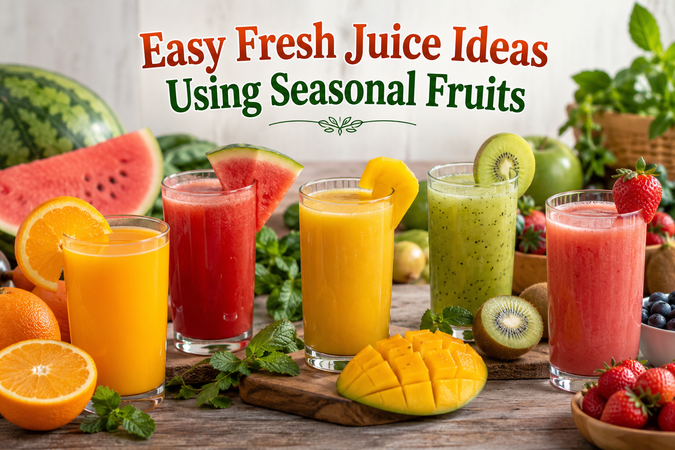
Fresh juice is one of the simplest ways to enjoy the natural taste of seasonal fruits. When fruits are available in their natural season, they often taste sweeter, smell fresher, and offer better value for money. Instead of depending on packaged drinks, making fresh juice at home gives you control over the ingredients and allows you to enjoy different flavors throughout the year.
I have always found seasonal fruits interesting because every part of the year brings something different to the kitchen. Summer may bring watermelon, mangoes, peaches, and berries, while cooler months introduce oranges, apples, pears, and pomegranates. This natural variety makes homemade juice more enjoyable and prevents the daily routine from becoming boring.
Easy fresh juice ideas using seasonal fruits do not require complicated recipes. In most cases, fresh fruit, a little water, and a blender or juicer are enough. By choosing fruits carefully and combining flavors wisely, anyone can prepare refreshing drinks for breakfast, afternoon breaks, family meals, or warm days.
Why Seasonal Fruits Are Great for Fresh Juice
Seasonal fruits are usually harvested when they are naturally ready to eat. This often gives them a fuller flavor compared with fruits that have traveled long distances or have been stored for extended periods.
Fresh seasonal fruits can also make homemade juice more affordable. When a fruit is widely available during its growing season, markets often offer it at a reasonable price. This makes it easier to buy enough fruit for the whole family without increasing the grocery budget too much.
Another advantage is variety. Instead of drinking the same juice every day, you can change your recipes according to what is available locally.
A refreshing watermelon juice may be perfect during summer, while fresh orange juice can be more enjoyable during cooler months.
Fresh Watermelon Juice
Watermelon juice is one of the easiest homemade juices to prepare. Watermelon naturally contains plenty of water, so very little extra liquid is needed.
Cut fresh watermelon into pieces and remove the seeds if necessary. Place the pieces in a blender and blend until smooth. You can strain the juice if you prefer a lighter texture, although keeping some pulp can provide a more natural drink.
A few fresh mint leaves can be added for extra freshness. A small squeeze of lemon can also balance the natural sweetness.
Watermelon juice tastes best when served immediately after preparation.
Mango and Orange Juice
Mango and orange create a rich and naturally sweet combination. This juice works especially well when ripe mangoes are available during the warmer season.
Peel one ripe mango and cut the flesh into small pieces. Add the mango to a blender with freshly squeezed orange juice. Blend until smooth.
If the mixture becomes too thick, add a small amount of cold water.
The sweetness of mango combines beautifully with the slightly tangy taste of orange. There is usually no need to add extra sugar when ripe fruits are used.
This fresh juice can be enjoyed at breakfast or as an afternoon drink.
Apple and Carrot Juice
Apple and carrot juice is a simple combination that can be prepared when fresh apples are easily available.
Wash the apples and carrots carefully before using them. Cut them into smaller pieces that are suitable for your juicer. Process the ingredients together and stir the juice before serving.
If you are using a blender instead of a juicer, add a small amount of water and blend everything until smooth. The mixture can then be strained according to your preferred consistency.
A little fresh ginger may be added for a stronger flavor. Start with a very small amount because ginger can easily overpower the sweetness of the apple.
Fresh Orange Juice
Sometimes the simplest juice is the most satisfying.
Fresh orange juice requires almost no preparation. Cut ripe oranges in half and squeeze them using a citrus juicer. You can leave some pulp in the drink or strain it depending on your preference.
Freshly squeezed orange juice has a bright flavor that works particularly well with breakfast.
Choose oranges that feel heavy for their size because they may contain more juice. Rolling an orange gently on the kitchen counter before cutting it can also make squeezing easier.
Serve fresh orange juice soon after preparation for the best flavor.
Pineapple and Mint Juice
Fresh pineapple has a strong tropical flavor that makes it an excellent base for homemade juice.
Remove the outer skin and hard center of a ripe pineapple. Cut the flesh into chunks and place them in a blender with some cold water.
Add several clean mint leaves and blend until smooth.
The amount of water can be adjusted depending on how thick you prefer your juice. Straining is optional.
Pineapple is naturally sweet, so additional sweeteners are often unnecessary.
This drink is especially refreshing during warm weather.
Strawberry and Apple Juice
When strawberries are in season, they can add beautiful color and fresh flavor to homemade drinks.
Wash the strawberries carefully and remove their green tops. Wash and cut an apple into pieces.
Blend the strawberries and apple with a small amount of water. If the apple is naturally sweet, the juice will usually need no added sugar.
For a lighter taste, a little lemon juice can be included.
This combination has a pleasantly sweet and slightly tangy flavor that works well as an afternoon refreshment.
Peach and Orange Juice
Ripe peaches make a wonderfully fragrant seasonal juice.
Wash the peaches and remove the stones. Cut the fruit into smaller pieces and place them in a blender. Add fresh orange juice and blend until smooth.
The orange helps loosen the texture of the peach while adding a fresh citrus flavor.
If the juice is still too thick, a small amount of cold water can be added.
Using fully ripe peaches is important because they provide both sweetness and aroma naturally.
Pomegranate and Apple Juice
Pomegranate season provides an excellent opportunity to prepare a colorful homemade drink.
Remove the seeds from a fresh pomegranate and combine them with pieces of sweet apple in a juicer.
If using a blender, blend the ingredients with a little water and strain carefully afterward.
Pomegranate has a naturally sharp taste, while apple provides sweetness. Together, they create a balanced flavor without requiring much additional preparation.
Serve the juice fresh rather than storing it for a long period.
Pear and Apple Juice
Pears have a soft sweetness that blends nicely with apples.
Choose ripe but firm pears and fresh apples. Wash them thoroughly and cut them into pieces. Process them through a juicer or blend with a small amount of water.
A tiny squeeze of lemon can prevent the flavor from becoming overly sweet while also adding freshness.
Pear and apple juice is mild, making it a good choice for people who prefer drinks without strong or sour flavors.
Grape and Lemon Juice
Fresh grapes can make a naturally sweet seasonal juice.
Wash the grapes carefully and remove any damaged fruit. Add the grapes to a blender with a small amount of water and blend well.
Strain the mixture if you prefer smooth juice.
Because grapes can be very sweet, adding a little fresh lemon juice creates a more balanced flavor.
Serve the juice cold or at room temperature according to preference.
Red and green grapes can both be used, and each variety will give the drink a slightly different taste.
Melon and Mint Juice
Melons such as cantaloupe can produce a smooth and fragrant drink.
Remove the skin and seeds before cutting the melon into pieces. Blend the pieces with a little cold water.
Add a few fresh mint leaves if desired.
Ripe melon has enough natural sweetness that additional sugar is rarely necessary. The final juice should taste light, fresh, and naturally fruity.
This is another excellent option for warm afternoons when seasonal melons are widely available.
Apple, Orange, and Ginger Juice
For people who enjoy stronger flavors, apple, orange, and ginger can be combined in one refreshing drink.
Use one sweet apple, fresh orange juice, and a very small piece of ginger.
Blend or juice the ingredients together. Taste the drink before adding more ginger because even a small piece can provide plenty of flavor.
The sweetness from the apple and orange creates a pleasant contrast with the warm taste of ginger.
This combination is simple enough for everyday preparation.
Mixed Seasonal Fruit Juice
Mixed fruit juice is useful when several ripe fruits need to be used before they become overripe.
You might combine apple, orange, pineapple, grapes, peaches, or whatever seasonal fruits are available.
The important thing is to avoid mixing too many strongly flavored fruits at once. Three ingredients are often enough.
Choose one sweet fruit, one slightly tangy fruit, and one mild fruit. This simple method makes it easier to create balanced homemade juice.
For example, apple, pineapple, and orange make a refreshing combination. Pear, peach, and orange can create a softer drink.
Experimenting with seasonal fruit combinations is part of the enjoyment of making juice at home.
How to Choose Fruits for Homemade Juice
Good juice begins with good fruit.
Look for fruits that are fresh, ripe, and free from damaged or spoiled areas. Fruit does not need to look perfectly shaped, but it should smell fresh and feel appropriate for its variety.
Very ripe fruit can often be excellent for juice because it provides natural sweetness.
Whenever possible, buy fruits according to their local season. Seasonal produce is often easier to find and may offer better flavor.
Wash all fruits carefully before cutting them, including fruits with skins that will later be removed. Washing helps keep the preparation area clean.
Avoid Adding Too Much Sugar
One of the advantages of using ripe seasonal fruit is that additional sugar may not be necessary.
Taste the juice before adding any sweetener. Mangoes, grapes, watermelon, pineapple, ripe pears, and many apples already contain natural sweetness.
If a juice tastes too sharp, consider adding a sweeter fruit instead of immediately reaching for sugar.
For example, apple can soften the taste of pomegranate, while ripe pear can balance stronger citrus flavors.
This approach keeps the natural taste of the fruits at the center of the drink.
Use Water Carefully
Water can help create the right consistency, particularly when using a blender.
However, adding too much water may weaken the flavor.
Start with a small amount and add more only when necessary. Watermelon, oranges, grapes, and similar fruits already contain plenty of liquid.
Thicker fruits such as mangoes, peaches, and bananas may need slightly more liquid.
Adjusting water gradually helps you achieve a refreshing juice without losing the natural fruit flavor.
Blender or Juicer
Both a blender and a juicer can be used for fresh juice preparation.
A juicer separates much of the pulp from the liquid, producing a smoother drink.
A blender keeps more of the fruit together. When using a blender, you can choose to drink the mixture as it is or strain it afterward.
For people who already own a blender, there is usually no need to purchase special equipment just to begin making fresh drinks.
Simple kitchen tools can produce excellent results.
Prepare Only What You Need
Fresh juice is best when enjoyed soon after preparation.
Instead of preparing a very large quantity, make enough for the people who will drink it immediately.
Fruit flavor and texture can change after preparation, especially when juice is exposed to air for a long period.
If you need to keep fresh juice temporarily, store it in a clean, covered container in the refrigerator and consume it as soon as practical.
Making smaller portions also reduces food waste.
Make Seasonal Juice Part of Everyday Meals
Homemade fruit juice does not need to be a complicated kitchen project.
It can become part of breakfast, weekend family meals, afternoon refreshments, or special occasions.
Keeping fresh seasonal fruits at home makes preparation easier. When fruit is already washed and ready to use, creating a simple drink may take only a few minutes.
You can also involve family members in choosing combinations. One person may enjoy watermelon and mint, while another may prefer apple and orange.
Changing recipes throughout the seasons keeps homemade drinks interesting.
Final Thoughts
Easy fresh juice ideas using seasonal fruits are a simple way to enjoy the natural flavors that each season brings. From refreshing watermelon juice in warm weather to fresh orange, apple, pear, and pomegranate combinations during cooler months, there are many possibilities for homemade drinks.
The best approach is to keep the recipes simple. Choose fresh seasonal fruit, use natural sweetness, add water only when needed, and experiment with two or three compatible flavors.
Watermelon and mint, mango and orange, apple and carrot, pineapple and mint, peach and orange, pomegranate and apple, and pear and apple are only a few combinations to try.
There is no need to depend on complicated ingredients or artificial flavors. Seasonal fruits already provide color, aroma, sweetness, and variety.
By paying attention to what is fresh in the market throughout the year, you can continue creating new juice ideas while keeping everyday drinks simple, enjoyable, and naturally flavorful.