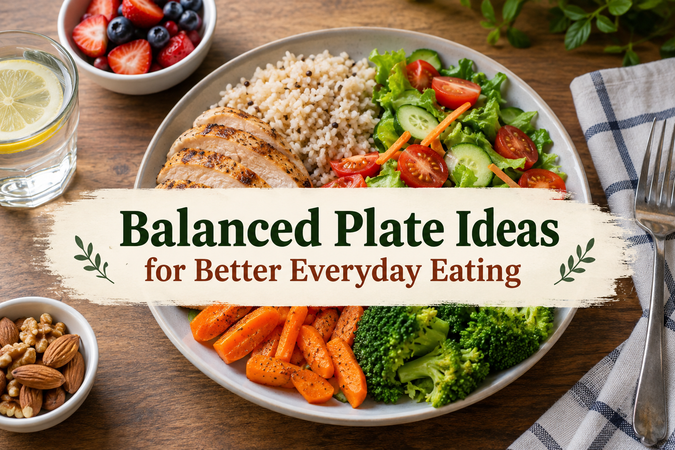
Eating well does not have to mean following a complicated diet or preparing special meals every day. In my view, one of the simplest ways to improve everyday nutrition is to think about balance. A balanced plate includes different types of foods that work together to provide the body with energy, protein, fiber, vitamins, minerals, and healthy fats.
The idea of a balanced plate is practical because it can be used at breakfast, lunch, dinner, and even when preparing quick meals. Instead of focusing too much on individual foods, it helps to look at the whole meal. When vegetables, fruits, whole grains, protein foods, and other nutritious ingredients are combined thoughtfully, everyday eating becomes easier and more enjoyable.
Balanced plate ideas are also flexible. The same basic approach can be adapted according to personal taste, available ingredients, budget, culture, and season. There is no need for every plate to look exactly the same. The goal is simply to create meals with variety and reasonable portions.
What Is a Balanced Plate?
A balanced plate is a meal that contains a useful combination of major food groups. Vegetables and fruits can provide vitamins, minerals, fiber, and natural color. Protein foods support normal body functions and help make meals satisfying. Whole grains and other nutritious carbohydrate foods provide energy. Healthy fats can also be included in moderate amounts.
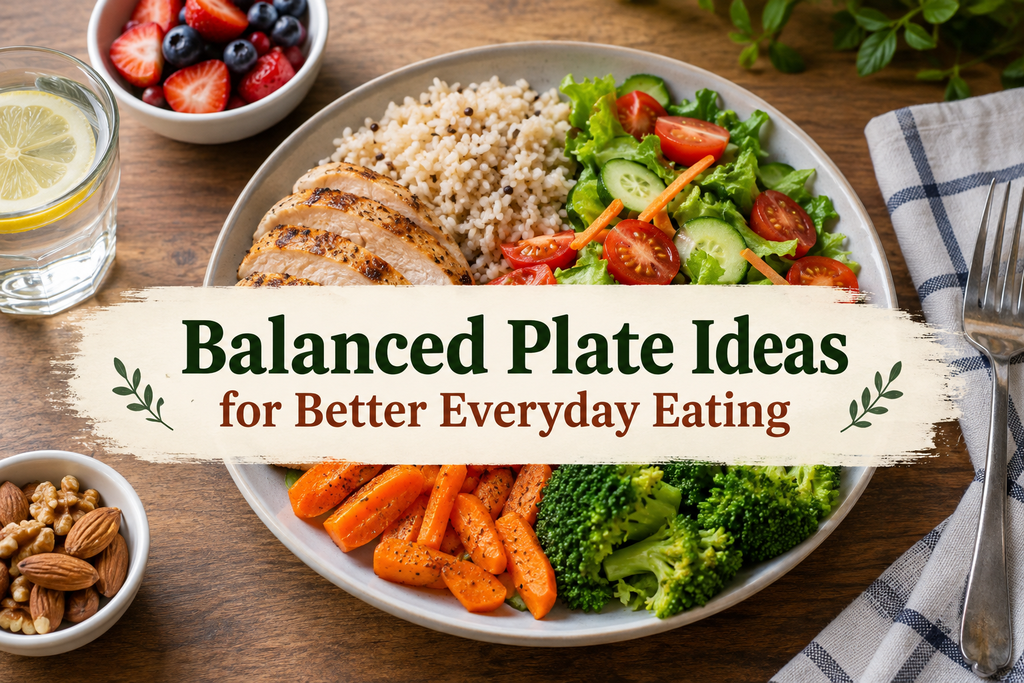
A simple way to imagine a balanced plate is to give plenty of space to vegetables, add a portion of protein, and include a source of quality carbohydrates. Fruit, dairy foods, nuts, seeds, or healthy fats can be added depending on the meal.
This method is easier for many people than counting every calorie or nutrient. It encourages us to pay attention to food quality and variety while still enjoying familiar meals.
Start With More Vegetables
Vegetables are one of the easiest foods to use when building balanced meals. They add volume, flavor, texture, color, and useful nutrients.
A dinner plate might include roasted carrots, broccoli, spinach, green beans, peppers, tomatoes, cabbage, or cauliflower. There is no need to choose expensive vegetables. Fresh, frozen, and properly prepared canned vegetables can all have a place in everyday meals.
Using more than one vegetable can make the plate more interesting. For example, steamed broccoli can be paired with roasted carrots, while a simple salad can contain lettuce, cucumber, tomato, and grated carrot.
Vegetables can also be mixed directly into meals. Spinach can be added to eggs. Peppers and mushrooms can be included in rice dishes. Carrots and peas can be cooked with lentils. These simple changes can improve the overall balance of a meal without making cooking difficult.
Add a Satisfying Protein Source
Protein is another important part of a balanced plate. It can help meals feel more complete and satisfying.
Common protein choices include eggs, chicken, fish, beans, chickpeas, lentils, yogurt, cottage cheese, tofu, and other similar foods. Nuts and seeds can also provide some protein while adding healthy fats and texture.
The best protein choice depends on the meal. Eggs may work well at breakfast. Lentils can be served at lunch. Chicken, fish, beans, or chickpeas can become the main protein at dinner.
Variety is useful here as well. Eating the same protein source every day can make meals repetitive. Rotating between eggs, lentils, beans, dairy foods, fish, poultry, and plant based options can make everyday eating more interesting.
Choose Quality Carbohydrates
Carbohydrate foods are often an important source of energy. Instead of completely avoiding them, it can be more practical to choose nutritious options and use reasonable portions.
Whole grain bread, oats, brown rice, whole wheat pasta, potatoes, sweet potatoes, corn, and other grain based foods can fit into balanced meals.
For example, a lunch plate might contain brown rice, grilled chicken, and vegetables. Another meal might include a baked potato with beans and a fresh salad.
Whole grain foods are especially useful because they can provide fiber and additional nutrients. However, balance is more important than trying to make every meal perfect. Even when refined grains are used, adding vegetables and protein can help create a more complete plate.
Use Color as a Simple Guide
A colorful plate is not automatically healthy, but natural food colors can be a useful reminder to include variety.
Green vegetables such as spinach and broccoli can be combined with orange carrots, red tomatoes, purple cabbage, or yellow peppers. Fruits can add even more natural color.
Different fruits and vegetables contain different nutrients and natural plant compounds. Eating a variety over the week can therefore be more useful than depending on just one or two types of produce.
When I think about meal planning, color is one of the easiest visual tools. If the plate looks plain and contains mostly one type of food, adding vegetables or fruit can often make it more balanced.
Balanced Breakfast Plate Ideas
Breakfast is sometimes rushed, but it can still follow the balanced plate idea.
One simple breakfast is eggs with whole grain toast and fresh fruit. The eggs provide protein, the toast provides carbohydrates, and the fruit adds fiber and natural sweetness.
Another option is oatmeal prepared with milk or yogurt and topped with banana, berries, nuts, or seeds. This meal combines whole grains, fruit, protein, and healthy fats.
Plain yogurt with chopped fruit, oats, and a small amount of nuts is another easy choice.
People who enjoy savory breakfasts can try an egg and vegetable omelet with bread or a small serving of potatoes.
The most useful breakfast is usually one that is nutritious, practical, and satisfying enough to fit naturally into the morning routine.
Balanced Lunch Ideas
Lunch can become unbalanced when it consists mostly of bread, rice, or snack foods. Adding protein and vegetables can make a major difference.
A simple rice bowl can include cooked rice, grilled chicken or chickpeas, cucumber, tomato, carrots, and yogurt.
A whole grain sandwich can contain egg, chicken, tuna, or beans along with lettuce, cucumber, and tomato. A piece of fruit can be added on the side.
Another balanced lunch is lentil soup with whole grain bread and a fresh vegetable salad.
Leftovers from dinner can also make excellent lunches. Cooked vegetables, rice, and protein can be stored properly and combined the next day.
Preparing lunch does not always require cooking a completely new meal.
Balanced Dinner Ideas
Dinner is a good opportunity to build a complete plate because there is often more time to prepare food.
A basic dinner could include grilled fish, roasted potatoes, and mixed vegetables.
Another option is chicken with brown rice and a large salad.
For a vegetarian meal, lentils can be served with rice and cooked vegetables. Chickpeas can also be combined with roasted vegetables and whole grain bread.
Pasta meals can become more balanced by adding vegetables and protein. Instead of serving only pasta with sauce, vegetables such as spinach, peppers, mushrooms, or broccoli can be included along with beans, chicken, or another protein source.
The goal is not to remove familiar foods. It is to improve the way they are combined.
Build a Better Rice Bowl
Rice bowls are easy, affordable, and flexible.
Start with a moderate portion of rice. Add a protein such as beans, chicken, egg, fish, lentils, or chickpeas. Then add vegetables.
Fresh cucumber and tomato work well when a light meal is preferred. Roasted vegetables can create a warmer and more filling bowl. A small spoonful of yogurt based sauce can add flavor and creaminess.
This same formula can produce many different meals simply by changing the vegetables and protein.
Make Sandwiches More Balanced
Sandwiches are convenient, but the ingredients inside them matter.
Whole grain bread can provide a useful base. Add a protein such as egg, chicken, tuna, cheese, beans, or hummus. Include vegetables such as lettuce, tomato, cucumber, peppers, or grated carrots.
Instead of relying heavily on creamy sauces, flavor can come from herbs, yogurt based spreads, mustard, lemon juice, or vegetables.
Serve the sandwich with fruit, a vegetable soup, or a side salad for a more complete meal.
Include Healthy Fats in Moderate Amounts
Healthy fats can improve the flavor and satisfaction of meals.
Nuts, seeds, avocado, olives, and certain vegetable oils are common examples. They can be added in small amounts because fats are energy dense.
A few nuts can be sprinkled over oatmeal or yogurt. Seeds can be added to salads. Avocado can be served with eggs or whole grain toast.
The goal is not to make meals fat free. Instead, it is helpful to choose nutritious fat sources and use sensible portions.
Add Fruit to Everyday Meals
Fruit can be a simple addition to a balanced eating pattern.
Fresh fruit can be eaten with breakfast or served after lunch. It can also be included in yogurt bowls, oatmeal, salads, or homemade smoothies.
Apples, bananas, oranges, berries, pears, peaches, grapes, and seasonal fruits can all be useful options.
Seasonal fruit can often provide good flavor at a reasonable price. Keeping fruit visible and easy to reach can also make it more likely to be eaten.
Balanced Plate Ideas on a Budget
Healthy meals do not have to depend on costly ingredients.
Beans, lentils, eggs, oats, potatoes, rice, seasonal vegetables, frozen vegetables, bananas, and other basic foods can be used to make many balanced meals.
For example, lentils with rice and vegetables can provide a simple and satisfying dinner. Eggs with potatoes and vegetables can create another affordable meal. Oatmeal with banana and a few seeds can make a nutritious breakfast.
Planning meals around ingredients that can be used several times during the week can also reduce waste.
A bag of carrots, for example, can be used in salads, soups, rice dishes, roasted vegetable meals, and snacks.
Use Simple Cooking Methods
Balanced eating becomes easier when cooking is simple.
Roasting, steaming, grilling, baking, boiling, and light sautéing can prepare many foods without complicated recipes.
Vegetables can be roasted together on one tray. Chicken or fish can be baked nearby. Rice or potatoes can provide the carbohydrate portion.
Simple cooking also makes it easier to appreciate natural flavors. Herbs, garlic, onions, lemon juice, pepper, and spices can add plenty of taste without requiring heavy sauces.
Prepare Some Ingredients in Advance
Meal preparation does not have to mean cooking an entire week of meals at once.
Preparing only a few basic ingredients can save time.
Vegetables can be washed and chopped. Rice can be cooked for later meals. Eggs can be boiled. Beans or lentils can be prepared in advance. Chicken can be cooked and stored properly for quick lunches.
When these foods are ready, putting together a balanced plate becomes much faster.
For example, cooked rice, leftover chicken, chopped cucumber, tomatoes, and yogurt can become a complete lunch in minutes.
Do Not Aim for Perfection
One of the most important lessons about healthy eating is that a single meal does not determine the quality of an entire diet.
Some meals will naturally contain more vegetables. Others may contain more grains or protein. Special occasions may look completely different from ordinary meals.
Balance should be considered over time.
Trying to create a perfect plate at every meal can make eating unnecessarily stressful. A better approach is to make nutritious choices regularly while allowing flexibility.
If lunch was low in vegetables, more vegetables can be included at dinner. If breakfast did not contain fruit, fruit can be eaten later in the day.
Pay Attention to Hunger and Fullness
A balanced plate is not only about choosing different food groups. Portion awareness also matters.
People have different energy needs depending on age, body size, activity level, and other factors. For this reason, one fixed portion size may not work for everyone.
Eating slowly can make it easier to notice when hunger is decreasing. Starting with a reasonable serving and taking more food if genuinely hungry can be a practical habit.
Meals should ideally leave us comfortably satisfied rather than overly full.
Keep Everyday Eating Enjoyable
Food provides nutrition, but enjoyment is also part of eating.
A balanced plate should include foods that taste good and fit personal preferences. People are more likely to maintain healthy habits when meals are enjoyable.
Spices, herbs, sauces, textures, and cooking methods can all make nutritious foods more appealing.
A bowl of plain vegetables may not be exciting, but roasted vegetables with garlic and herbs can taste completely different. Lentils can be prepared with spices. Yogurt can be combined with fruit and cinnamon.
Healthy eating becomes much easier when nutritious food is something we genuinely want to eat.
Final Thoughts
Balanced plate ideas for better everyday eating are based on a simple principle: combine different nutritious foods instead of depending too heavily on one type of food.
Vegetables and fruits can provide fiber, vitamins, minerals, and variety. Protein foods can make meals more satisfying. Whole grains and other quality carbohydrates can provide useful energy. Healthy fats can add flavor and support a well rounded eating pattern.
A balanced breakfast might include eggs, whole grain toast, and fruit. Lunch could be a rice bowl with chicken, vegetables, and yogurt. Dinner might include fish, potatoes, and roasted vegetables. Plant based meals with lentils, beans, chickpeas, vegetables, and grains can also fit easily into this approach.
The most important thing is consistency rather than perfection. Small improvements made regularly can create a better overall eating pattern. Adding another vegetable, choosing whole grains more often, including a useful protein source, or preparing food at home are all practical steps.
Balanced eating does not need to feel like a strict diet. It can simply become a natural way of building satisfying, colorful, and nutritious meals every day.