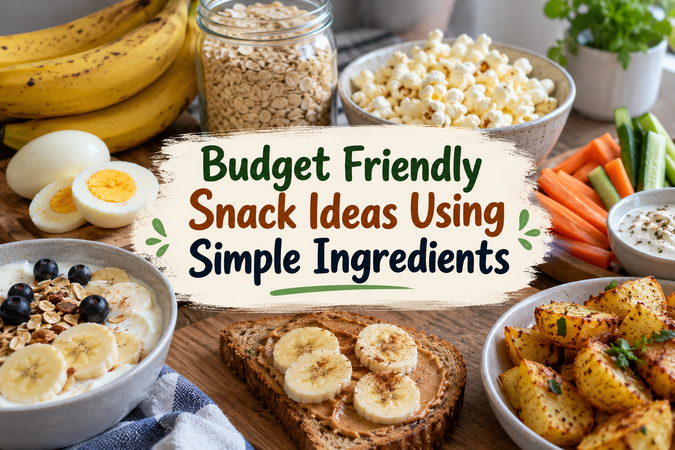
Snacks are an important part of everyday eating. They can help control hunger between meals, provide extra energy, and make a busy day more comfortable. The problem is that packaged snacks can quickly increase the grocery bill. Many ready made snack foods also contain ingredients that we may not normally use when preparing food at home.
Fortunately, making affordable snacks does not require expensive ingredients or complicated recipes. Some of the best budget friendly snack ideas use ordinary foods such as oats, eggs, bananas, potatoes, bread, yogurt, rice, vegetables, and peanut butter.
I have found that simple snacks are often the most practical. When basic ingredients are already available in the kitchen, it becomes easier to prepare something fresh instead of buying costly packaged products. With a little planning, anyone can create filling and enjoyable snacks while keeping food expenses under control.
Why Budget Friendly Snacks Are Worth Making
Food costs can become surprisingly high when small purchases are made every day. A packet of chips, a bakery item, a sweet drink, or a packaged snack may not seem expensive on its own, but these purchases can add up over a week or month.
Homemade snacks give us more control over both cost and ingredients. We can prepare the amount we need and use foods that are already available at home.
Another advantage is flexibility. One ingredient can often be used in several different ways. Bananas can be eaten with peanut butter, mixed into oats, added to yogurt, or blended into a simple smoothie. Potatoes can be boiled, roasted, mashed, or turned into homemade potato bites.
Using ingredients in different ways keeps snacks interesting without requiring a long shopping list.
Banana With Peanut Butter
Bananas are one of the easiest fruits to use for an affordable snack. They require no cooking and can be combined with many basic ingredients.
Slice a banana and spread a small amount of peanut butter over the pieces. You can also spread peanut butter on a slice of bread and add banana slices on top.
Bananas provide natural sweetness, while peanut butter adds richness and makes the snack more satisfying.
If peanut butter is expensive in your area, the banana can simply be eaten with a glass of milk or added to homemade oatmeal.
This simple combination works well for breakfast, study breaks, or afternoon hunger.
Homemade Oatmeal Bowl
Oats are useful because they are affordable, filling, and easy to store. A small bowl of oatmeal can become a comforting snack when hunger appears between meals.
Cook oats with water or milk until soft. Add sliced banana, chopped apple, raisins, or a small amount of cinnamon for extra flavor.
You do not need expensive toppings. Even plain oatmeal with banana can be enjoyable.
For a cold version, mix oats with yogurt or milk and leave them in the refrigerator for several hours. The oats soften and create an easy snack that can be prepared in advance.
Buying oats in a larger package may also be more economical than purchasing individual snack portions.
Boiled Eggs
Eggs are another useful ingredient for simple snacks. They are easy to prepare and can be stored in the refrigerator after cooking.
Boil several eggs at the beginning of the week. When you need a quick snack, peel one and add a small amount of black pepper or another favorite seasoning.
A boiled egg can also be sliced and placed on toast.
Preparing several eggs at once saves time and makes it easier to avoid reaching for packaged snacks when you are hungry.
Toast With Simple Toppings
Bread can be turned into many different budget friendly snacks.
Toast a slice of bread until lightly crisp. Then choose a topping based on what you already have in the kitchen.
You can use peanut butter, mashed banana, yogurt, sliced tomato, cooked egg, mashed beans, or a small amount of cheese.
The goal is not to add many ingredients. One or two simple toppings are usually enough.
Using bread before it becomes stale is also a useful way to reduce food waste.
Yogurt With Fruit
Plain yogurt can become a refreshing snack without requiring expensive flavored varieties.
Place some yogurt in a bowl and add chopped seasonal fruit. Bananas, apples, peaches, or other affordable fruits can work well.
If the yogurt tastes too plain, add a small amount of honey or naturally sweet fruit.
Seasonal fruit is often less expensive than imported fruit, so choosing what is locally available can help reduce costs.
Yogurt can also be combined with oats for a more filling snack.
Roasted Potatoes
Potatoes are commonly available and can be used for much more than main meals.
Cut a potato into small pieces, add a small amount of cooking oil and your preferred spices, and roast until tender.
Homemade roasted potatoes can satisfy the desire for something warm and savory without relying on expensive packaged snacks.
You can also boil potatoes and sprinkle them with black pepper, paprika, herbs, or another seasoning already available in your kitchen.
Keeping the preparation simple helps maintain the budget friendly nature of the snack.
Homemade Popcorn
Popcorn can be one of the most affordable snacks when prepared from plain kernels at home.
Heat a small amount of oil in a covered pot, add popcorn kernels, and allow them to pop. Once finished, add a little salt or seasoning.
Homemade popcorn is especially useful for movie nights or family snacks because a relatively small amount of kernels produces a large bowl.
Buying plain popcorn kernels can also be more economical than buying individual flavored packets.
You can experiment with simple seasonings already in your cupboard instead of purchasing special flavor mixes.
Apple Slices With Cinnamon
Apples are convenient snacks because they can be eaten with very little preparation.
For something slightly different, slice an apple and sprinkle a small amount of cinnamon over it.
You can also serve apple slices with peanut butter or yogurt.
If apples are expensive at certain times of the year, use another seasonal fruit. The same idea works with pears, bananas, or peaches.
Choosing fruit according to season is one of the easiest ways to make healthy snacking more affordable.
Homemade Vegetable Sticks
Raw vegetables can create a fresh snack with almost no cooking.
Carrots and cucumbers are especially easy to prepare. Wash them properly, cut them into sticks, and serve them plain or with a simple homemade dip.
A quick yogurt dip can be prepared by mixing plain yogurt with a pinch of salt, herbs, and black pepper.
Vegetables that are already available for lunch or dinner can also be used for snacks. This prevents the need to purchase separate ingredients only for snacking.
Rice With Yogurt
Leftover cooked rice can sometimes be turned into a simple snack instead of being wasted.
A small portion of rice can be mixed with plain yogurt and mild seasoning for a quick savory option.
Leftover rice can also be combined with vegetables and gently warmed in a pan.
Using leftovers creatively is one of the best ways to keep snack costs low. Before buying new snack ingredients, check what is already available in the refrigerator.
Many foods left from regular meals can be transformed into satisfying snacks.
Chickpeas as a Filling Snack
Chickpeas are useful for anyone trying to prepare affordable and filling food.
Cooked chickpeas can be mixed with chopped tomato, cucumber, lemon juice, and simple spices.
You can keep the recipe very basic. Even chickpeas with lemon juice, salt, and black pepper can taste good.
Dry chickpeas usually require soaking and cooking, but they can be economical when prepared in larger quantities.
Cooked chickpeas can be stored in the refrigerator and used for snacks, salads, or meals during the week.
Simple Homemade Smoothies
A smoothie does not need expensive powders or unusual ingredients.
A banana, some milk, and a few spoonfuls of oats can create a simple and filling drink.
If you have fruit that has become very ripe, adding it to a smoothie can prevent waste.
Frozen fruit can also be useful. When bananas become too ripe to eat normally, peel and freeze them. Later, blend them with milk or yogurt.
This is a practical way to save food while creating an easy snack.
Homemade Potato and Egg Bites
Potatoes and eggs can be combined to make a simple homemade snack.
Boil a potato and mash it. Mix it with cooked egg, mild seasoning, and a small amount of flour if needed to help hold the mixture together.
Shape the mixture into small pieces and cook them in a lightly greased pan.
These bites can be prepared using ingredients that many households already buy regularly.
They are also useful when you want something more substantial than fruit or toast.
Peanut Butter Oat Bites
Oats and peanut butter can be combined into simple snack bites.
Mix oats with peanut butter and mashed banana until the mixture holds together. Shape it into small balls and refrigerate them.
The banana adds natural sweetness and helps bind the ingredients.
These bites are convenient because they can be prepared in advance and stored for quick snacks.
There is no need to add expensive protein powders or special sweeteners. Basic ingredients work perfectly well.
Make Use of Seasonal Foods
Seasonal shopping can make a noticeable difference to a food budget.
Fruits and vegetables are often more affordable when they are naturally abundant. Instead of deciding on one particular fruit before shopping, check which options offer the best value.
A snack plan can then be built around those ingredients.
For example, when bananas are affordable, use them with oats, yogurt, toast, or smoothies. When carrots are inexpensive, prepare vegetable sticks, grated carrot sandwiches, or cooked carrot snacks.
Flexibility makes budget eating much easier.
Keep Snacks Simple
One common mistake is thinking that homemade snacks need many ingredients.
They do not.
A banana and peanut butter can be enough. Toast and an egg can be enough. Yogurt and fruit can be enough.
Complicated recipes often require buying extra ingredients that are used only once. This can increase food expenses and leave unused products in the cupboard.
Simple recipes are easier to prepare, easier to remember, and usually easier on the budget.
Plan Snacks Along With Regular Meals
Snack planning works best when it is connected with regular meal planning.
Before shopping, think about foods that can serve several purposes.
Eggs can be used for breakfast, sandwiches, salads, and snacks. Yogurt can be eaten with fruit, oats, or savory foods. Potatoes can become part of dinner or an afternoon snack.
Choosing flexible ingredients means you get more value from each purchase.
It also reduces the chance that ingredients will remain unused until they spoil.
Use Leftovers Wisely
Reducing food waste is an important part of budget friendly eating.
A small amount of leftover vegetables can be added to eggs. Cooked potatoes can become potato bites. Rice can be turned into a quick savory snack. Ripe fruit can be blended into smoothies.
Before throwing food away, consider whether it can safely be used in another dish.
Small amounts of food may seem unimportant, but regularly using leftovers can reduce grocery expenses over time.
Prepare Snacks in Advance
Convenience is one reason people buy packaged snacks.
When hunger appears during a busy day, most of us choose whatever is easiest.
Preparing a few snacks in advance makes homemade options just as convenient.
Boil some eggs, wash fruit, cut vegetables, cook chickpeas, prepare oat bites, or portion yogurt into containers.
Even ten minutes of preparation can make the next few days easier.
Keeping ready to eat snacks visible in the refrigerator can also encourage family members to choose them first.
Final Thoughts
Budget friendly snack ideas using simple ingredients prove that good snacks do not need to be expensive or complicated. Oats, bananas, eggs, potatoes, bread, yogurt, rice, chickpeas, vegetables, and seasonal fruits can be used in many different ways.
The most effective approach is to work with ingredients you already buy, choose seasonal foods, prepare simple recipes, and make good use of leftovers. Planning a few snacks ahead can also reduce the temptation to buy packaged foods when hunger suddenly appears.
Affordable snacking is not about creating perfect recipes. It is about making practical choices with ordinary food.
A bowl of oatmeal, a boiled egg, fruit with yogurt, homemade popcorn, vegetable sticks, or simple toast can all become satisfying snacks.
When we learn to use basic ingredients creatively, we can enjoy greater variety while keeping grocery expenses under control. Simple food can still be fresh, comforting, convenient, and enjoyable, which makes homemade budget friendly snacks a practical choice for everyday life.