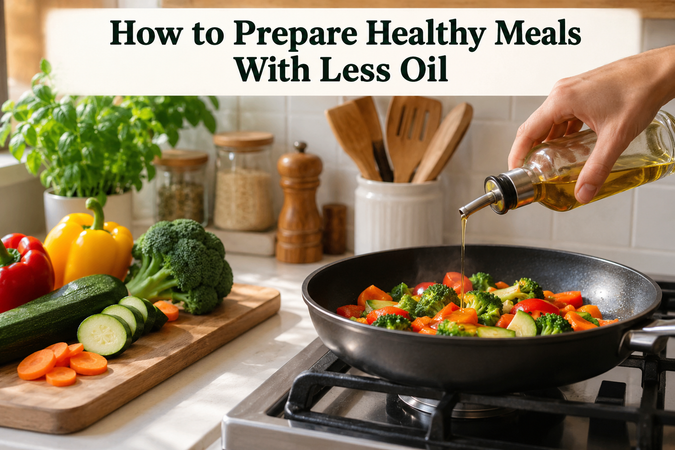
Preparing healthy meals with less oil is one of the simplest ways to improve everyday eating habits without giving up the foods you enjoy. Oil is commonly used for frying, sautéing, roasting, and adding flavor to meals. While some oils can be part of a balanced diet, using more than necessary can increase the calorie content of a meal very quickly.
The good news is that healthy cooking does not have to mean eating dry, tasteless, or boring food. With the right ingredients and cooking techniques, you can prepare flavorful meals using much less oil. Vegetables can remain colorful, meat can stay tender, and homemade dishes can still taste satisfying.
I have found that reducing oil is much easier when the focus is placed on cooking methods rather than simply removing oil from recipes. Small changes in the kitchen can make a noticeable difference over time.
Understand Why Less Oil Can Be Helpful
Oil is concentrated in calories because it is almost entirely made of fat. Even a small quantity can add a significant amount of energy to a meal.
This does not mean that all fats should be avoided. The body needs dietary fats for several important functions, including helping the body absorb certain vitamins. Foods such as nuts, seeds, fish, avocado, and some vegetable oils can provide useful fats.
The main goal is moderation.
When meals already contain ingredients that naturally provide fat, adding large quantities of cooking oil may not always be necessary. Learning to control the amount of oil used during preparation can make meals lighter while allowing you to enjoy a wide variety of foods.
Measure Oil Instead of Pouring It Freely
One of the easiest ways to prepare healthy meals with less oil is to measure it before cooking.
When oil is poured directly from a bottle into a pan, it is easy to use more than intended. A measuring spoon provides much better control.
Start with a small amount and add more only if it is truly needed.
For many recipes, one or two teaspoons may be enough to coat the pan and cook the ingredients properly. The exact amount depends on the dish, the size of the pan, and the cooking method.
This simple habit can reduce unnecessary oil without changing the recipe completely.
Use a Good Nonstick Pan
A quality nonstick pan can make low oil cooking much easier.
Food tends to stick to traditional cookware when there is not enough fat between the ingredients and the surface. Nonstick cookware reduces this problem, allowing many foods to cook successfully with very little oil.
Eggs, vegetables, pancakes, fish, and other everyday foods can often be prepared using only a light coating of oil.
Keep the cooking temperature moderate because extremely high heat can damage some types of nonstick cookware. Always follow the care instructions provided with the pan.
Steam Vegetables Instead of Frying Them
Steaming is one of the simplest ways to cook vegetables without adding oil.
Broccoli, carrots, beans, cauliflower, spinach, peas, and many other vegetables become tender while maintaining much of their natural flavor.
After steaming, vegetables can be seasoned with lemon juice, black pepper, garlic, herbs, or a small amount of your preferred seasoning.
Steamed vegetables are especially useful when creating balanced meals because they can be served with rice, lentils, chicken, fish, beans, or whole grains.
You can also lightly steam vegetables before adding them to another dish. This reduces the amount of oil needed to soften them during cooking.
Try Boiling and Simmering
Many nutritious meals can be prepared through boiling or simmering.
Lentils, beans, soups, rice dishes, vegetable stews, and homemade curries can often be cooked with surprisingly little oil.
Instead of frying ingredients in several tablespoons of oil, try cooking onions and tomatoes with a small amount of oil and a splash of water. Once the vegetables soften, spices and other ingredients can be added.
As the dish simmers, flavors begin to combine naturally.
Slow simmering is particularly useful for lentil dishes, bean recipes, soups, and tomato based meals because these foods develop deeper flavors over time.
Sauté With Water or Broth
Traditional sautéing usually begins with oil, but part of the oil can sometimes be replaced with water or broth.
Place chopped onions, garlic, peppers, mushrooms, or other vegetables in a heated pan. Add a small amount of water or vegetable broth whenever the ingredients begin sticking.
Continue stirring until they become soft.
You may still use a teaspoon of oil for flavor if you prefer, but you will probably need much less than with traditional sautéing.
This technique works especially well for vegetables that naturally release moisture while cooking.
Bake Instead of Deep Frying
Deep frying requires food to be cooked in a large amount of hot oil. Baking can create satisfying results with considerably less added fat.
Potatoes, chicken pieces, vegetable patties, fish, and many other foods can be baked in the oven.
Lightly coat the food with a small amount of oil, add herbs or spices, and place it on a baking tray. Cook until the outside becomes golden and the inside is properly cooked.
For extra crispness, turn the food halfway through cooking.
Baking is especially convenient because several portions can be prepared at the same time.
Use an Air Fryer When Available
An air fryer can also be helpful for preparing foods with less oil.
Air fryers circulate hot air around food, allowing the surface to become crisp without completely covering the food in oil.
Potato wedges, vegetables, chicken, fish, and homemade snacks can often be prepared using only a small amount of oil.
A light brush or spray is usually enough for many recipes.
Air frying should still be combined with nutritious ingredients. Cooking highly processed foods in an air fryer does not automatically turn them into balanced meals. The ingredients you choose remain important.
Grill Foods for Natural Flavor
Grilling is another excellent low oil cooking method.
Chicken, fish, vegetables, paneer, tofu, and many other ingredients can develop rich flavor when grilled.
The cooking process creates slightly browned areas on the surface, which adds taste without requiring a large quantity of oil.
A simple marinade made with lemon juice, yogurt, garlic, herbs, spices, and a small amount of oil can keep grilled food flavorful and moist.
Vegetables such as peppers, onions, zucchini, tomatoes, mushrooms, and eggplant are particularly delicious when grilled.
Use Herbs and Spices for Flavor
Many people rely heavily on oil because they believe it gives food most of its flavor. Oil can certainly contribute to taste and texture, but it is not the only source of flavor.
Herbs and spices can completely transform a meal.
Try ingredients such as garlic, ginger, cumin, coriander, paprika, turmeric, black pepper, chili, oregano, basil, parsley, mint, cinnamon, or curry spices depending on the recipe.
Fresh lemon or lime juice can brighten a dish. Vinegar can add acidity. Fresh herbs can provide aroma and freshness.
When food is well seasoned, reducing oil becomes much easier because the meal still tastes interesting and satisfying.
Use Tomatoes to Create Moisture
Tomatoes are extremely useful when cooking with less oil.
Fresh tomatoes, tomato puree, or crushed tomatoes can create moisture in curries, stews, soups, and sauces. Their natural liquid prevents ingredients from becoming too dry.
Onions, garlic, and spices can be cooked with a small amount of oil before tomatoes are added. As the tomatoes soften, they produce enough liquid to help cook the remaining ingredients.
This technique works well for lentils, beans, vegetables, chicken, and many traditional home cooked meals.
Use Yogurt in Marinades and Sauces
Plain yogurt can provide moisture and creaminess without requiring large amounts of oil.
It works particularly well in marinades for chicken or vegetables. Yogurt can help carry spices while keeping ingredients moist during cooking.
For a simple marinade, combine plain yogurt with garlic, ginger, lemon juice, black pepper, herbs, and your favorite spices.
Allow the ingredients to rest before grilling, baking, or roasting them.
Yogurt can also be used in dips and sauces, creating a creamy texture without depending heavily on added fats.
Roast Vegetables With a Light Coating of Oil
Roasted vegetables can taste rich even when only a small amount of oil is used.
The key is to spread the vegetables evenly across the baking tray rather than overcrowding them.
Place chopped vegetables in a bowl, add a small quantity of oil, and mix thoroughly so the oil is distributed across all the pieces.
Then add herbs and spices.
Carrots, cauliflower, sweet potatoes, peppers, onions, broccoli, pumpkin, and zucchini are all good choices.
Roasting brings out the natural sweetness of many vegetables, which means they need very little additional fat for flavor.
Choose Lean Protein Sources
The type of protein you cook can also influence how much fat is present in a meal.
Lean chicken, fish, beans, lentils, eggs, tofu, and other protein sources can be prepared using low oil methods.
When cooking meat, remove unnecessary visible fat when appropriate. Grill, bake, steam, or simmer rather than deep frying.
Beans and lentils are particularly convenient because they can be cooked with very little added oil while providing protein, fiber, and important nutrients.
Including plant based protein in some meals can also add variety to your diet.
Avoid Reusing Large Amounts of Frying Oil
Deep frying often leaves a large quantity of oil behind. Repeated frying can also encourage people to include fried foods more frequently simply because the oil is already available.
Instead, try planning meals around cooking methods that require only small amounts of oil from the beginning.
Grilling, steaming, baking, boiling, roasting, and simmering are all practical alternatives.
You do not need to completely remove fried foods from your life. Enjoying them occasionally can fit into a balanced eating pattern. The important point is that they should not become the only cooking method used every day.
Make Soups Part of Your Meal Plan
Homemade soups can be nutritious, filling, and naturally low in oil.
Vegetable soup, chicken soup, lentil soup, bean soup, and mixed grain soups can all be prepared with very little added fat.
Begin with onions, garlic, herbs, or spices. Use a small amount of oil if needed, then add vegetables, water, broth, beans, lentils, or protein.
Allow everything to simmer until tender.
Soups are also a convenient way to use leftover vegetables before they spoil.
Create Balanced Plates
Reducing oil works best when it is part of an overall balanced approach to eating.
A simple meal may include vegetables, a protein source, a whole grain or other carbohydrate, and a small amount of healthy fat.
For example, grilled chicken can be served with brown rice and steamed vegetables. Lentil curry can be paired with whole grain bread and salad. Baked fish can be served with roasted vegetables and potatoes.
When meals contain several nutritious ingredients, there is less need to depend on oil for satisfaction.
Cook Slowly When Necessary
Some people use extra oil because they cook food at very high temperatures. Ingredients may burn or stick before they become fully cooked.
Using moderate heat can solve this problem.
Onions, vegetables, and spices often develop better flavor when given enough time to cook gently. If the pan becomes too dry, add a spoonful of water rather than immediately adding more oil.
Patience can make low oil cooking much easier.
Prepare Simple Homemade Dressings
Salads are naturally nutritious, but dressings can sometimes contain large quantities of oil.
You can prepare lighter dressings at home using lemon juice, yogurt, vinegar, herbs, mustard, garlic, or a small amount of olive oil.
A simple yogurt dressing can be made with plain yogurt, lemon juice, black pepper, garlic, and fresh herbs.
For a lighter vinaigrette, use more lemon juice or vinegar and less oil than a traditional recipe.
Homemade dressings also allow you to control the ingredients according to your taste.
Focus on Gradual Changes
There is no need to completely change your cooking habits overnight.
If you normally use four tablespoons of oil in a recipe, try using three the next time. If the food still cooks well and tastes good, try reducing it further.
Gradual changes are often easier to maintain because your taste preferences have time to adjust.
After a while, meals that once seemed to require a lot of oil may taste perfectly satisfying with much less.
Common Mistakes to Avoid
Reducing oil does not mean allowing food to burn or become completely dry.
Use moisture from water, broth, tomatoes, yogurt, or vegetables when necessary. Control cooking temperatures and stir ingredients regularly.
Another mistake is replacing oil with large quantities of sugar, cream, cheese, or processed sauces. The goal is to create an overall healthier meal, not simply exchange one high calorie ingredient for another.
Pay attention to the complete recipe.
Final Thoughts
Learning how to prepare healthy meals with less oil is mainly about developing smarter cooking habits. You do not need expensive ingredients or complicated recipes. Simple techniques such as measuring oil, steaming vegetables, baking instead of deep frying, grilling proteins, using nonstick cookware, and adding water or broth during sautéing can make a meaningful difference.
Flavor does not have to disappear when oil is reduced. Garlic, herbs, spices, tomatoes, lemon juice, yogurt, and fresh ingredients can create meals that are colorful, aromatic, and satisfying.
The best approach is not to fear oil but to use it thoughtfully. A small amount can contribute flavor and texture, while other cooking techniques can do much of the remaining work.
With regular practice, preparing healthy meals with less oil can become a normal part of everyday home cooking. The result is food that feels lighter, tastes fresh, and supports a balanced approach to eating without making meals unnecessarily complicated.