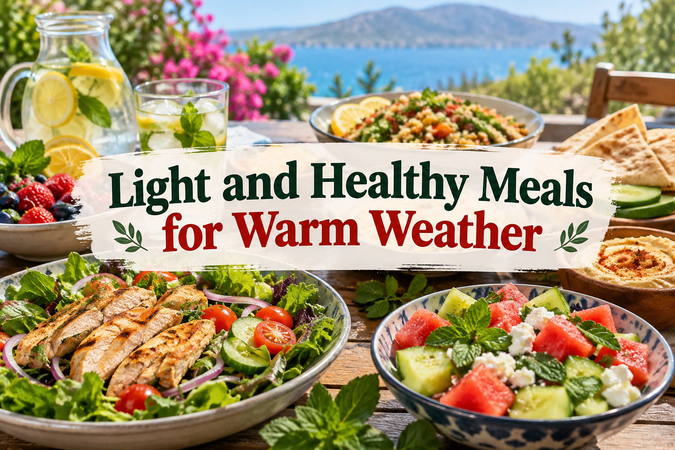
Warm weather often changes the way we think about food. Heavy meals that feel comforting during colder months may become less appealing when the temperature rises. On hot days, most people naturally prefer foods that are fresh, colorful, easy to digest, and simple to prepare. This makes warm weather an ideal time to explore light and healthy meals filled with vegetables, fruits, whole grains, lean proteins, and refreshing ingredients.
Light meals do not have to be boring or leave you feeling hungry. A well planned summer meal can be satisfying while still feeling fresh and comfortable. The key is choosing ingredients that provide nutrition, flavor, and enough energy without making the meal unnecessarily heavy.
Why Light Meals Are Ideal for Warm Weather
Our appetite can change when the weather becomes hot. Large portions of rich or greasy food may feel uncomfortable, especially during the hottest part of the day. Light and healthy meals can make eating more enjoyable because they often contain fresh ingredients with naturally high water content.
Foods such as cucumber, tomatoes, watermelon, lettuce, oranges, berries, and bell peppers contain plenty of water. Including these foods in regular meals can add freshness while also providing useful vitamins, minerals, and plant compounds.
A light meal should still contain a good balance of nutrients. Combining vegetables or fruits with protein, whole grains, and healthy fats helps create a complete meal that provides lasting satisfaction.
Fresh Vegetable Salad With Grilled Chicken
A colorful vegetable salad with grilled chicken is one of the easiest light meals for warm weather.
Start with a base of lettuce, spinach, or another leafy green. Add sliced cucumber, tomatoes, carrots, bell peppers, and a little red onion. Grilled chicken can provide protein without making the meal feel too rich.
For dressing, a simple mixture of olive oil, lemon juice, herbs, and black pepper works beautifully. Fresh lemon adds brightness and helps bring the ingredients together.
You can also add beans, seeds, avocado, or a small amount of cheese depending on your preferences.
The advantage of this type of meal is flexibility. You can use whatever vegetables are fresh and available in your kitchen.
Refreshing Cucumber and Tomato Bowl
Cucumber and tomato make a simple but refreshing combination during hot weather.
Chop cucumber and ripe tomatoes into bite sized pieces. Add fresh herbs such as parsley, coriander, mint, or basil. A small amount of onion can provide extra flavor.
Finish the bowl with lemon juice and a little olive oil.
For a more complete meal, add chickpeas, grilled chicken, boiled eggs, or cooked lentils. These protein rich ingredients help turn a simple vegetable bowl into a satisfying lunch.
This meal is especially useful on busy days because very little cooking is required.
Chickpea Salad for a Quick Summer Lunch
Chickpeas are an excellent ingredient for light meals because they provide plant based protein and fiber.
A simple chickpea salad can be made by combining cooked chickpeas with cucumber, tomatoes, bell peppers, parsley, and onion. Lemon juice, olive oil, garlic, and black pepper can be used as a simple dressing.
The result is filling without feeling too heavy.
Chickpea salad can also be prepared in advance and stored in the refrigerator. This makes it convenient for work lunches or days when you do not want to cook during hot afternoon hours.
Whole Grain Wraps With Fresh Vegetables
Wraps are another easy option for warm weather meals.
Choose a whole grain wrap and fill it with lettuce, cucumber, tomatoes, carrots, grilled vegetables, or other fresh ingredients. Add a protein source such as chicken, tuna, chickpeas, beans, or eggs.
A small amount of hummus or yogurt based dressing can add flavor and moisture.
Wraps are convenient because they require very little preparation and can be customized for different tastes.
They are also easy to pack, making them suitable for work, school, picnics, or outdoor activities.
Rice Bowls With Colorful Vegetables
A rice bowl can be light and healthy when the portion is balanced properly.
Start with a moderate serving of cooked brown rice or another whole grain. Add plenty of fresh or lightly cooked vegetables such as carrots, cucumber, spinach, cabbage, broccoli, or bell peppers.
Next, include a source of protein. Grilled chicken, fish, tofu, beans, lentils, or eggs are all good choices.
Finish with herbs, lemon juice, or a simple homemade sauce.
The goal is to make vegetables the largest part of the bowl while using grains and protein to provide energy and satisfaction.
Healthy Cold Pasta Salad
Pasta salad is a popular warm weather meal because it can be served cold and prepared in advance.
Whole grain pasta can provide additional fiber compared with traditional refined pasta. Once the pasta has cooled, mix it with chopped tomatoes, cucumber, peppers, spinach, and fresh herbs.
You can add grilled chicken, tuna, beans, or chickpeas for protein.
Instead of using a heavy creamy dressing, try olive oil with lemon juice, herbs, garlic, and black pepper.
This creates a refreshing pasta salad that works well for lunch, dinner, or outdoor gatherings.
Grilled Fish With Fresh Salad
Fish can be a great choice for warm weather because many varieties cook quickly and pair well with fresh vegetables.
Grill or bake a piece of fish with lemon, herbs, and light seasoning. Serve it alongside a large salad made with lettuce, cucumber, tomatoes, carrots, and seasonal vegetables.
You can also add a small portion of brown rice, quinoa, or roasted potatoes if you want extra carbohydrates.
Keeping the preparation simple allows the natural flavors of the ingredients to remain noticeable.
Watermelon and Cucumber Salad
Watermelon is refreshing because of its naturally high water content and sweet flavor.
Combine watermelon cubes with sliced cucumber and fresh mint. A little lime or lemon juice can add extra freshness.
Some people also enjoy adding a small amount of cheese for a combination of sweet and savory flavors.
This dish works well as a light side dish or refreshing snack. It can also be served alongside grilled foods during warm weather meals.
Vegetable and Hummus Plate
Not every meal requires complicated cooking.
A vegetable and hummus plate can be a practical choice when you want something simple.
Arrange sliced cucumber, carrots, peppers, tomatoes, and other vegetables on a plate. Serve them with hummus for protein and healthy fats.
Whole grain crackers, pita bread, or a boiled egg can be added to make the meal more filling.
This type of meal is particularly helpful during very hot days when spending a long time near the stove feels uncomfortable.

Egg and Vegetable Bowl
Eggs are versatile and can be used in many light meals.
Boiled eggs can be sliced and served with lettuce, cucumber, tomatoes, spinach, carrots, and other vegetables. Add herbs and a small amount of olive oil or lemon juice.
Eggs provide protein, while vegetables add fiber and important nutrients.
This meal is simple enough for breakfast, lunch, or a quick dinner.
Lentil Salad With Fresh Herbs
Lentils are another useful ingredient for healthy warm weather meals.
Cook lentils until tender and allow them to cool. Mix them with chopped tomatoes, cucumber, peppers, onion, and fresh herbs.
Add lemon juice, olive oil, and black pepper for flavor.
Because lentils contain both protein and fiber, a lentil salad can be surprisingly satisfying even though it feels light and fresh.
Simple Fruit and Yogurt Bowl
For breakfast or a lighter meal, a fruit and yogurt bowl can be refreshing and nutritious.
Choose plain yogurt and add fresh fruits such as strawberries, blueberries, peaches, mango, banana, or melon.
A small amount of oats, nuts, or seeds can provide additional texture and nutrients.
Using plain yogurt allows you to control the amount of added sweetness. Fresh fruit naturally adds flavor and color.
This is a particularly convenient option during mornings when you want something quick and cool.
Healthy Smoothies for Busy Days
Smoothies can be useful when you need a fast breakfast or snack.
Combine fruit with yogurt or milk and add ingredients such as spinach, oats, or seeds. Water can also be included to adjust the consistency.
Good combinations include banana with berries, mango with yogurt, peach with oats, or pineapple with spinach.
It is usually better to use whole fruits rather than relying on added sugar. Whole fruits contribute natural sweetness while also providing nutrients.
Smoothies can be refreshing, but they should still be treated as part of a balanced diet rather than replacing every regular meal.
Use Seasonal Produce Whenever Possible
Warm weather brings many colorful fruits and vegetables into season.
Tomatoes, cucumbers, berries, melons, peaches, peppers, leafy greens, corn, and other produce can add variety to everyday meals.
Seasonal ingredients often have excellent flavor, which means you may need fewer sauces and complicated seasonings.
Visiting a local market or produce section and choosing several different colors is a simple way to create interesting meals throughout the week.
Different colors in fruits and vegetables often represent different plant nutrients, so variety is useful for both nutrition and enjoyment.
Keep Cooking Methods Simple
Healthy warm weather cooking does not need to involve complicated recipes.
Grilling, steaming, baking, and lightly sautéing are simple methods that can preserve flavor without requiring excessive amounts of oil.
Fresh ingredients can also be served raw when appropriate.
During hot weather, preparing several basic ingredients in advance can save time. For example, you can cook grains, grill chicken, boil eggs, wash vegetables, and prepare beans ahead of time.
These ingredients can then be combined into salads, bowls, and wraps throughout the week.
Include Protein in Light Meals
One common mistake when preparing light meals is creating a plate that contains only vegetables.
Vegetables are important, but adding protein can make the meal more satisfying.
Useful protein sources include chicken, fish, eggs, beans, lentils, chickpeas, tofu, yogurt, nuts, and seeds.
You do not need a large amount of protein in every dish. Even a moderate portion can help create better balance and prevent hunger from returning too quickly.
Choose Healthy Fats in Moderate Portions
Healthy fats can improve both flavor and satisfaction.
Olive oil, avocado, nuts, and seeds can be added to summer meals in reasonable portions.
For example, a spoonful of seeds can make a salad more interesting, while a few slices of avocado can add a creamy texture to a vegetable bowl.
The goal is balance. Healthy fats are nutritious, but they are also energy dense, so moderate portions usually work best.
Drink Enough Fluids
Food choices are important during warm weather, but hydration also deserves attention.
Water should be the main drink throughout the day. Fresh fruit slices, cucumber, mint, or lemon can be added to water if you prefer more flavor.
Foods with high water content can also contribute to overall fluid intake.
Watermelon, cucumber, oranges, strawberries, tomatoes, and lettuce are good examples.
Sugary drinks can add large amounts of sugar without providing the same nutritional value as whole foods, so water and other unsweetened drinks are usually better everyday choices.
Plan Meals Around Fresh Ingredients
Meal planning becomes much easier when you begin with a few fresh ingredients.
Choose several vegetables, one or two fruits, a protein source, a whole grain, and a few basic flavoring ingredients.
For example, buying cucumber, tomatoes, lettuce, peppers, chicken, brown rice, yogurt, and seasonal fruit can provide the foundation for several different meals.
One day you can make a chicken salad. The next day you can prepare a rice bowl. Leftover vegetables can become a wrap, while yogurt and fruit can be used for breakfast.
This approach reduces unnecessary food waste while keeping meals interesting.
Avoid Making Healthy Meals Too Complicated
Healthy eating often becomes difficult when every meal requires a long list of ingredients.
Simple combinations can be just as nutritious.
A grilled protein with vegetables and a whole grain is already a balanced meal. A salad containing beans and several vegetables can also work well. Yogurt with fruit and oats is another simple option.
Keeping meals practical makes healthy eating easier to maintain over time.
Final Thoughts
Light and healthy meals for warm weather are all about freshness, balance, and simplicity. Colorful vegetables, juicy fruits, lean proteins, whole grains, beans, yogurt, and healthy fats can be combined in countless ways to create meals that are both refreshing and satisfying.
You do not need complicated recipes to eat well during hot weather. Simple salads, wraps, grain bowls, grilled fish, vegetable plates, chilled pasta salads, smoothies, and fruit bowls can provide plenty of variety.
The most useful approach is to choose fresh ingredients you genuinely enjoy and prepare them in simple ways. By filling meals with vegetables and fruits while including enough protein, whole grains, and healthy fats, you can create food that feels light while still providing good nutrition.
Warm weather is a perfect opportunity to enjoy natural colors, fresh flavors, and easy cooking. With a little planning, healthy meals can become one of the most enjoyable parts of the season.