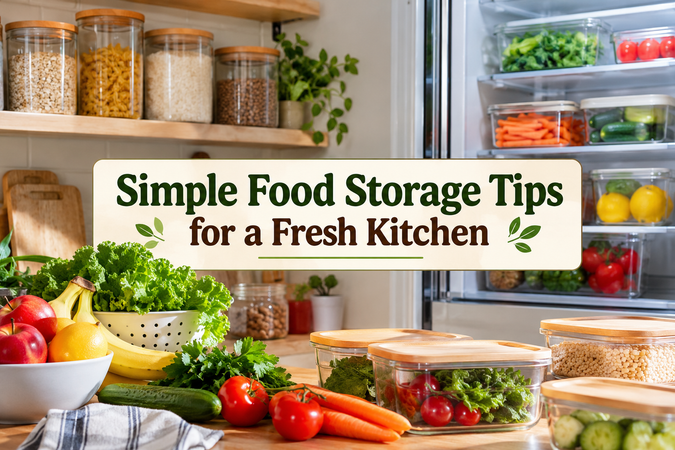
A fresh and organized kitchen makes everyday cooking easier and more enjoyable. When food is stored properly, ingredients stay fresh for longer, less food goes to waste, and the kitchen feels cleaner. Good food storage is not only about putting vegetables in the refrigerator or placing dry foods inside a cabinet. It is about understanding what different foods need to maintain their taste, texture, and quality.
Many people buy fresh fruits, vegetables, dairy products, grains, and other groceries with the intention of using them throughout the week. However, improper storage can cause these foods to lose freshness earlier than expected. Vegetables may become soft, bread may become stale, and pantry foods may develop an unpleasant smell or texture.
Learning a few simple food storage tips can make a noticeable difference. These habits do not require expensive equipment or complicated methods. Most of them are based on basic organization, cleanliness, temperature control, and proper containers.
Keep Your Refrigerator Clean and Organized
The refrigerator is one of the most important places for food storage in the kitchen. Keeping it clean and organized helps you see what food is available and prevents forgotten items from sitting in the back for too long.
Try to avoid filling the refrigerator completely. Cold air needs enough space to move around the shelves. When the refrigerator is overcrowded, some areas may not stay as cool as others.
Arrange similar foods together. Keep dairy products in one section, vegetables in the vegetable drawers, fruits in another suitable space, and leftovers in clearly visible containers.
A quick refrigerator check once or twice a week can also be helpful. Look for foods that should be used soon and plan meals around them. This simple habit can reduce unnecessary food waste.
Use Clear Storage Containers
Clear containers are very useful for keeping a kitchen organized. They allow you to see the food inside without opening every container.
Use clean containers with secure lids for cooked meals, chopped vegetables, dry ingredients, and leftovers. Containers that close properly can help protect food from moisture, air, and unwanted kitchen odors.
Clear containers are especially useful in refrigerators because forgotten food is one of the main reasons leftovers are wasted.
If possible, choose containers in different sizes. Small containers are useful for sauces and snacks, while larger ones work well for cooked meals, grains, or chopped vegetables.
Always wash containers properly before putting new food inside them.
Store Dry Foods in a Cool and Dry Place
Rice, pasta, flour, lentils, beans, oats, spices, and other dry foods usually stay in the pantry or kitchen cabinets.
These foods should be protected from excessive heat and moisture. A cool and dry cabinet away from direct sunlight is usually a suitable place.
After opening the original package, transfer foods that are used frequently into tightly closed containers. This helps protect them from moisture and keeps the pantry looking organized.
Make sure containers are completely dry before adding flour, rice, or other dry ingredients. Even a small amount of moisture can affect the quality of dry foods.
Label Your Food Containers
Labels are one of the easiest food storage tools available.
Write the name of the food and the date it was prepared or stored on the container. This is particularly useful for homemade meals, sauces, cooked grains, and freezer foods.
When several containers look similar, labels remove confusion. You will know exactly what is inside and when it was prepared.
Simple removable labels or small pieces of food safe tape can work well. You do not need a complicated labeling system.
Follow the First In, First Out Method
A very practical food storage habit is to use older food before newly purchased food.
When you bring groceries home, place newer products behind older ones whenever possible. This encourages you to use foods that have been in the kitchen longer.
For example, if you already have one packet of pasta and buy another one, place the new packet behind the old packet.
The same idea can be used with canned food, yogurt, milk, vegetables, and many pantry ingredients.
This simple system can reduce waste and make kitchen management easier.
Store Fruits and Vegetables Carefully
Fruits and vegetables do not all require the same storage conditions.
Many vegetables stay fresh longer when kept in the refrigerator. Leafy vegetables usually benefit from a cool environment and protection from excess moisture.
Fruits such as apples and grapes are also commonly refrigerated, while some fruits are better kept at room temperature until they become ripe.
Bananas, for example, are usually kept outside the refrigerator while they ripen. Once some fruits become fully ripe, refrigeration may help slow further ripening.
Try not to wash all fruits and vegetables immediately after shopping unless you plan to use them soon. Extra moisture can sometimes encourage faster spoilage.
Instead, wash produce shortly before eating or cooking.
Keep Leafy Vegetables Dry
Leafy vegetables can become soft quickly when too much moisture is trapped around them.
If you wash leafy vegetables before storage, dry them carefully. A clean kitchen towel or salad spinner can help remove extra water.
Place the dry leaves in a suitable container with a clean paper towel to absorb excess moisture.
Do not pack the leaves too tightly. Giving them some space can help maintain their texture.
Check stored greens occasionally and remove any damaged leaves before they affect the rest.
Store Fresh Herbs Properly
Fresh herbs add wonderful flavor to meals, but they can lose freshness quickly.
Different herbs may benefit from slightly different storage methods. Some soft herbs can be kept with their stems in a small container of water, similar to flowers.
Other herbs may stay fresh when loosely wrapped in a slightly damp paper towel and placed inside a container in the refrigerator.
Before storing herbs, remove damaged leaves. Avoid trapping too much water around them.
Fresh herbs are easier to use when they are visible, so keep them somewhere in the refrigerator where you will remember them.
Avoid Storing Bread in a Damp Place
Bread needs protection from unnecessary moisture.
For bread that will be eaten soon, a clean bread box or suitable container at room temperature may work well.
Keeping bread in a warm and humid area can reduce its quality. Avoid placing it close to the stove or another source of heat.
If you have more bread than you can use within a short period, freezing part of it can be a practical option. Sliced bread is particularly convenient because you can remove only the amount you need.
Store Dairy Products Properly
Milk, yogurt, cream, cheese, and similar dairy foods should be returned to the refrigerator soon after use.
Avoid leaving dairy products on the kitchen counter longer than necessary.
Keep packages properly closed to prevent them from absorbing odors from other foods.
For many refrigerated products, the inner shelves provide a more stable temperature than areas exposed to frequent temperature changes when the refrigerator door is opened.
Always check the storage instructions printed on the product packaging because recommendations can vary.
Cool Leftovers Before Storing Them Properly
Leftovers can save time and make the next meal easier, but they need careful handling.
Place cooked food in clean containers and refrigerate it promptly rather than leaving it sitting in the kitchen for long periods.
Large amounts of food can be divided into smaller containers. Smaller portions usually cool more evenly and are also easier to reheat later.
Write the storage date on the container if you are likely to forget when the meal was prepared.
Keep leftovers where they are easy to see so they can be used before preparing another meal.
Make Good Use of Your Freezer
The freezer is one of the best tools for reducing food waste.
Extra bread, cooked meals, vegetables suitable for freezing, homemade sauces, and many other foods can be frozen for later use.
Use freezer suitable containers or bags that close securely. Remove unnecessary air when possible and label each package.
Writing the date on frozen food is especially important because many frozen meals look very similar after a few weeks.
Organize the freezer into simple sections so you can find food easily. For example, keep vegetables in one area, prepared meals in another, and bread in another.
Store Spices Away From Heat
Spices are commonly stored near the cooking area because it is convenient. However, constant exposure to heat, steam, and strong light can reduce their quality.
Keep spices in a cool and dry cabinet when possible.
Make sure spice containers are closed properly after each use. Avoid shaking spice jars directly over a steaming pot because moisture can enter the container.
Clean the outside of spice jars regularly because cooking oil and dust can collect on them over time.
Keep Onions and Potatoes in Suitable Places
Onions and potatoes are everyday kitchen ingredients, but they need proper storage.
They are usually best kept in cool, dry, and well ventilated conditions away from strong light.
Avoid keeping them in damp containers or tightly sealed plastic bags where moisture can collect.
It is also helpful to store potatoes and onions separately rather than keeping them together in the same container.
Check them regularly and remove any item that has started to spoil.
Do Not Mix New Food With Old Food Without Checking
When refilling a storage jar, it may seem convenient to pour fresh food directly on top of what is already inside.
Instead, check the remaining food first.
If a container holds rice, flour, cereal, or another dry ingredient, empty and clean the container occasionally before refilling it completely.
This gives you an opportunity to check the quality of the older food and helps maintain general kitchen cleanliness.
Keep Storage Areas Clean
Proper food storage also depends on the cleanliness of shelves, cabinets, refrigerator drawers, and containers.
Clean spills as soon as possible. Small food particles can create unpleasant smells and make storage spaces look untidy.
Wipe pantry shelves regularly and check corners for crumbs or damaged packages.
The refrigerator should also be cleaned regularly. Remove expired or spoiled food and wipe the shelves with a clean cloth using an appropriate cleaning method.
A clean storage area makes it easier to identify problems early.
Buy Food According to Your Needs
One of the easiest ways to keep food fresh is to avoid buying more than your household can reasonably use.
Large packages may seem economical, but they are not always a good choice if part of the food is eventually wasted.
Before shopping, check your refrigerator, freezer, and pantry. Make a simple list of what is actually needed.
Planning a few meals in advance can also help you buy suitable amounts of vegetables, fruits, dairy products, and other fresh ingredients.
When you shop with a plan, food storage becomes much easier.
Check Food Regularly
Even well stored food should be checked from time to time.
Look through your refrigerator and pantry regularly. Move foods that need to be used soon toward the front.
Check vegetables for soft or damaged areas. Examine fruits and remove any spoiled pieces before they affect nearby produce.
Look at dry foods occasionally to make sure their containers remain clean, dry, and properly closed.
Regular checking takes only a few minutes but can save food and money.
Create a Simple Kitchen Storage Routine
The most effective kitchen storage system is one that is easy enough to follow every day.
You do not need dozens of special containers or complicated labels. Start with simple habits.
Put refrigerated groceries away as soon as you return from shopping. Keep dry food packages closed. Label leftovers. Use older ingredients first. Clean spills quickly. Check the refrigerator before buying more food.
When these small actions become part of your normal kitchen routine, food storage becomes much easier.
Final Thoughts
Simple food storage tips can make a big difference in the way a kitchen looks and functions. Proper storage helps maintain food quality, keeps ingredients organized, reduces unnecessary waste, and makes everyday meal preparation more convenient.
The key is not to create a perfect kitchen overnight. Instead, develop practical habits that fit naturally into your daily routine. Keep the refrigerator organized, use clean containers, protect dry foods from heat and moisture, label leftovers, rotate pantry ingredients, and pay attention to the different storage needs of fresh produce.
A fresh kitchen begins with thoughtful food management. When you know what food you have and where it is stored, cooking becomes easier and shopping becomes more purposeful. Small improvements in food storage can eventually lead to a cleaner kitchen, better use of ingredients, and a more enjoyable home cooking experience.